
Custom Rapid Prototyping Services
Many custom manufacturing processes & finishes.
Results delivered fast.
Ready for testing, validation, or market launch.
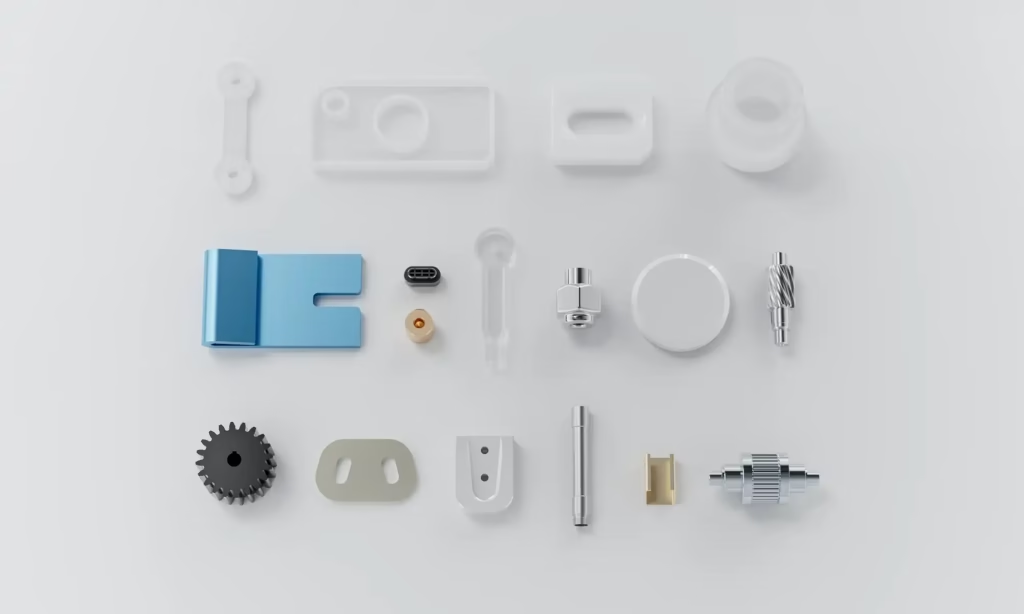
- No MOQ
- No MOV
- ISO 9001Compliant
- DFM Design Support
Benefits of Custom Rapid Prototyping Services
Whether you’re validating a concept or bridging to production, prototypes help you learn faster, iterate smarter, and build better.
Our production facility in China is owned and managed by an international team of manufacturing professionals dedicated to your success.
Accelerate Product Development with Rapid Prototyping Services
Get precision CNC or vacuum-cast prototypes that look, feel, and perform like production parts without the long lead times, high tooling costs, or quality compromises.
Precision Rapid Prototyping Services
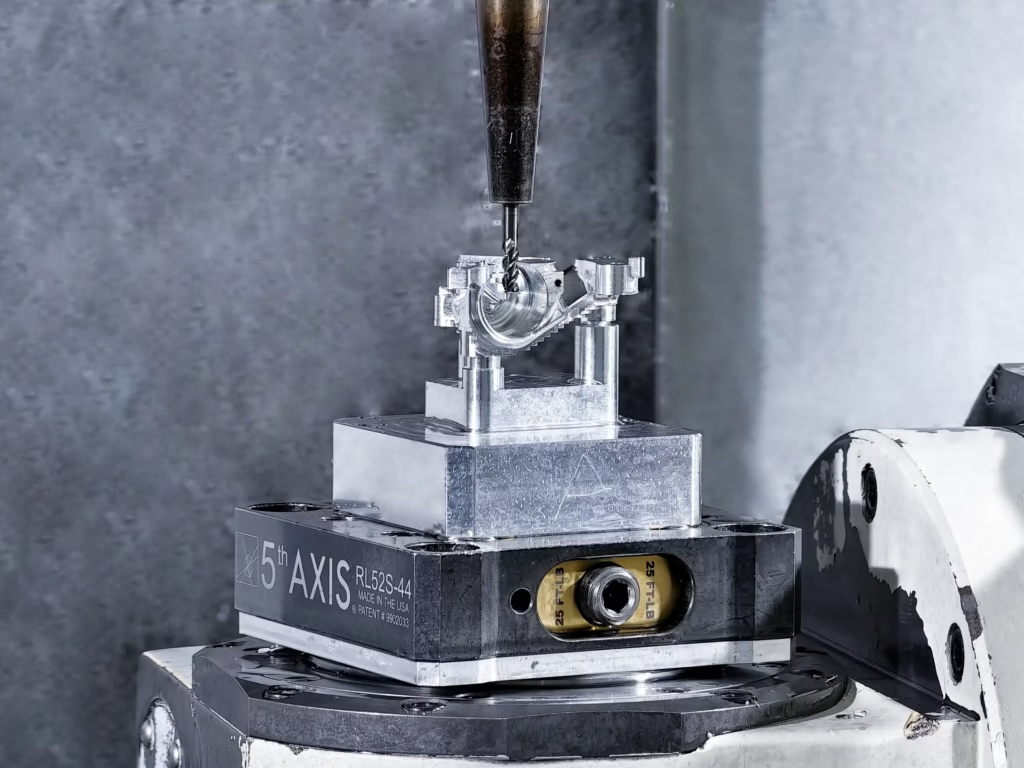
Our advanced multi-axis CNC milling and turning centers precisely machine high-tolerance prototypes from metals and engineering plastics.
Your parts come out full strength and production quality, ideal for engineering testing and validation. And of course you’ll have access to the finest finishing services including painting, plating, silk screening, pad printing, anodizing, chromate conversion coating and more.
No need to compromise on quality or make a large initial investment in tooling or materials. Eliminate long lead times and tooling costs – get CNC prototypes that look, feel, and perform like final production parts.
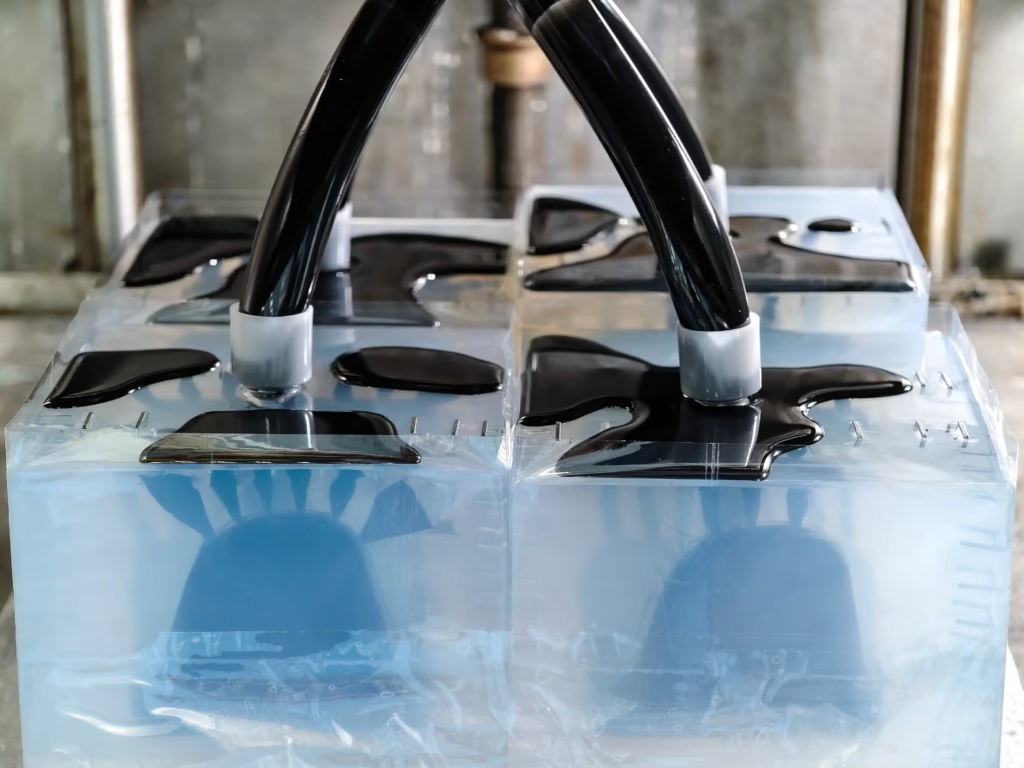
Polyurethane vacuum casting delivers high-fidelity plastic prototypes with production-level finish, fast. Using silicone molds formed around a 3D-printed master, we replicate your design in days without expensive hard tooling.
These molds can make up to 25 prototype replicas of the master pattern, accurately reproducing high tolerances and fine surface textures.
Your vacuum casting prototypes can be further refined with overmolding, insert molding, CNC machining, painting, and printing – everything you need to produce showroom-ready finished plastic parts in a matter of days and at minimal expense.
Get low-volume injection molded parts in as little as two weeks, ideal for pilot runs, bridge production, or market testing.
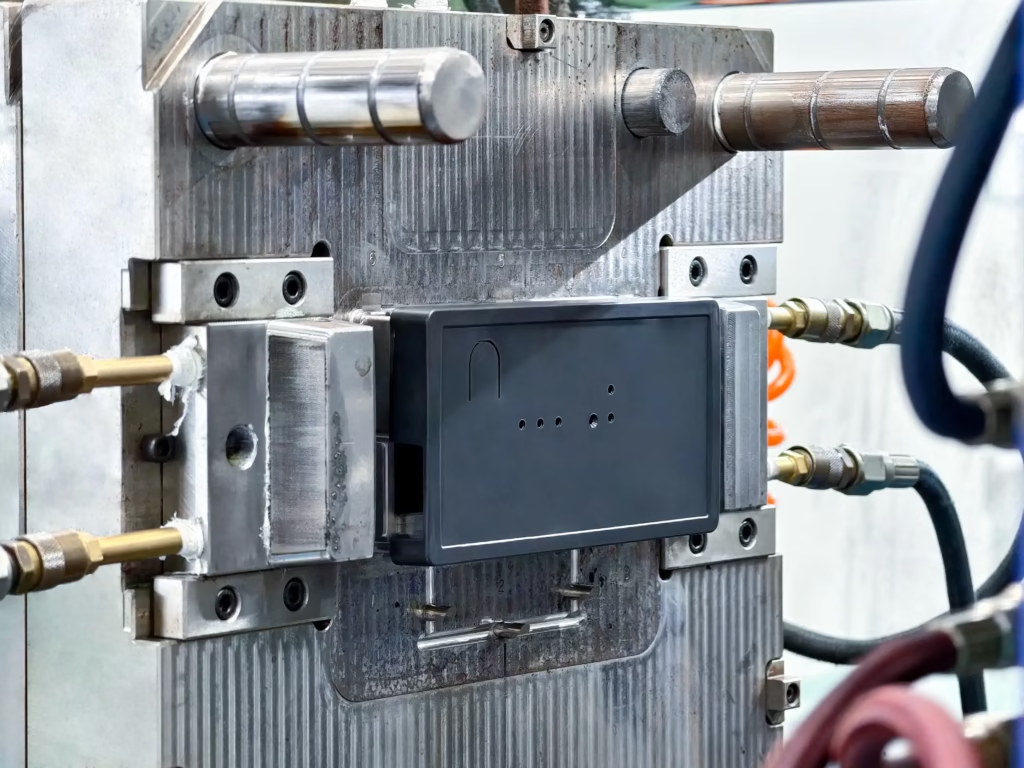
Our toolmakers combine easy-to-machine P20 tool steel with standard commodity resins that have stable, predictable molding characteristics – perfect for optimizing tool builds where design simplicity and time to market are paramount.
Rapid tooling manufacturing services from Procision help you bring validated designs to market faster, with less risk and lower upfront cost.
How it works
Applications of Rapid Prototyping
Visual Prototypes
Proof-of-concept Prototypes
Test whether an idea is feasible in early design development to avoid costly investments later.
Test The Market
Use prototypes to gauge likely consumer response and make strategic adjustments.
Functional Prototypes
These prototypes are made to the same standards as a production part, often using robust engineering materials.
Pre-production prototypes
Used for final validation, process optimization and regulatory approvals.
Get a Rapid Prototyping Quote and Project Review
Our team of technical professionals is ready to assist.
Why Choose Procision for Rapid Prototype Manufacturing Services?
We’re industry veterans at turning design concepts into exceptional prototypes and production parts using only the finest materials, equipment, and process control systems.
You’ll receive full engineering support with no MOQ or MOV restrictions, backed up with ISO-certified quality and preferred AEO customs clearance priority on your valuable shipments
Advanced Equipment
- CNC milling & turning centers
- Swiss-type lathes
- Automated robotic spray booth
Industry Expertise
- Custom model shop
- Complete in-house finishing
- Prefered AEO customs clearance
Material Versatility
- Incoming material verification
- Certificates of compliance
- Complete inspection reports
Rapid Prototyping Vs. Production
Rapid prototyping involves making a physical copy of a design idea. Prototypes may start off as rough approximations with loose tolerances, becoming steadily more refined as the design is improved upon and readied for production.
For this reason, rapid prototyping places a priority on fast turnaround, using simple materials and more basic surface finishing techniques. They are meant to be inexpensive and not usually intended to be put into service. Important uses of prototypes include:
- Design iteration
- Functional testing
- Display models
- Crowdfunding campaigns
- Proof-of-concept
- Bridge to production
Mass production, on the other hand, demands consistency across large volumes and between production runs. This means using more stable and reliable manufacturing processes featuring tighter tolerances and more robust raw materials.
Initial investment is higher with production, and may require investing in hardened steel molding tools. However, this investment eventually pays for itself when volumes increase and the cost-per-piece goes down.
Our Custom Rapid Prototyping Services Process
Upload your CAD file
You provide 2D and 3D files of your prototypes, with as much detail as you can including all dimensions and tolerances, materials, surface finish, and color.
DFM Review
Our engineers will analyze your prototype design and optimize it to improve manufacturability, quality and production lead time.
Manufacturing
Upon design approval, we’ll manufacture your rapid prototypes to achieve consistent tolerances and excellent surface finishes.
Quality Assurance
A final quality inspection is conducted with sophisticated measuring instruments to verify all tolerances and features.
Shipping
Your finished rapid prototypes are carefully packaged and securely shipped to you anywhere in the world.
Common Questions
Rapid Prototyping Services — Frequently Asked Questions
What is rapid prototyping?
Rapid prototyping uses advanced manufacturing methods to quickly turn digital designs into physical parts – helping you validate form, fit, and function without large upfront costs.
When done right, it limits your financial exposure and helps you avoid very costly mistakes later in the development cycle.
You can see what you’re doing right, what you may have missed, and make quick adjustments with little risk. That agility shortens your design cycle and reduces time-to-market.
What are the most common prototyping methods?
The most common manufacturing methods for prototypes include CNC machining, vacuum casting and 3D printing. For simple designs, it’s possible to use rapid tooling as a prototyping method to quickly get plastic parts to market in preparation for low volume production.
How quickly can I receive my finished parts?
Lead times vary by process and complexity, but once production begins most parts are ready in 3 ~ 7 days.
What are the costs associated with rapid prototyping?
Depending on the application, a prototype might represent 20% the cost of a full production counterpart. Of course, Procision has no minimum order volume or order value restrictions, so you only pay for exactly what you need.
How does Procision ensure the quality of their rapid prototyping services?
We apply exactly the same quality standards to rapid prototypes as we do with high volume production. First, you’ll get a comprehensive DFM analysis to help identify any potential manufacturing or design issues. Then we test and verify all raw materials and provide complete certification reports. Every part is carefully measured during production, and receives a comprehensive final quality inspection and approval report before shipment. We stand behind our workmanship and will meet and exceed all of your specifications on every part, every time.
Ready to Start Your Next Project?
Our technical team is ready to help