

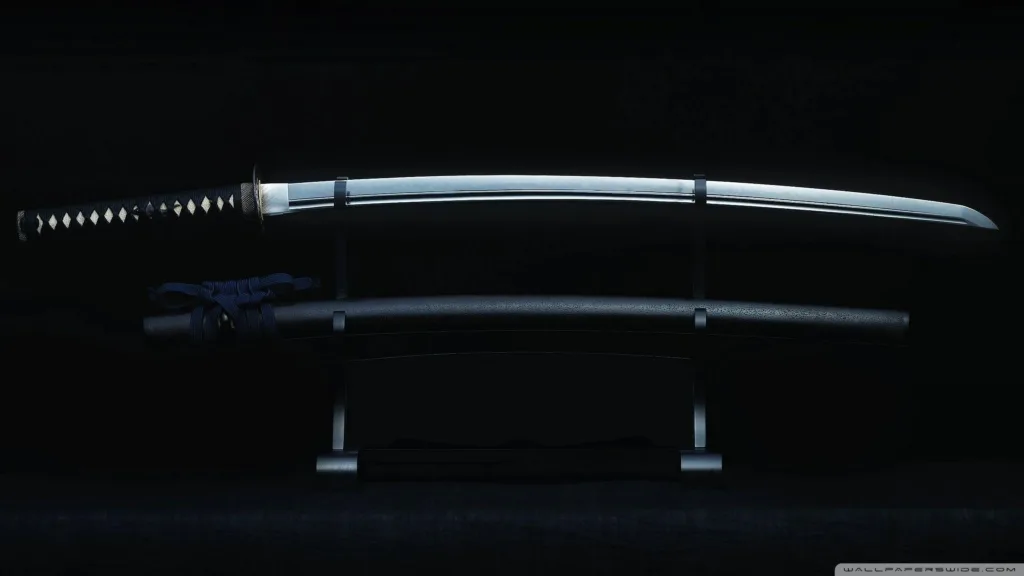
Imagine you’re a samurai. C’mon, you know you do it all the time. And as a noble samurai, you’re expected to cut down your foe in a single awesome stroke. Check out Samurai Assassin or any Zatoichi film to see what I mean.
To do this without embarrassing yourself in front of your samurai buddies, you’d better be sure that your blade is nice and sharp. But exactly what do we mean by sharp and how can you be sure?
No one who’s ever played with a blade can resist the almost genetic need to run a thumb along an edge to test its mettle. This is fun (and dangerous!), but it doesn’t really count for science, now does it? Nor does shaving the hair on your arms or slicing a piece of paper into strips. (I mean, what kind of paper are we talking about here? Virgin or recycled wood pulp in 20 lb. bond, or deluxe 100% cotton rag in 32lb. bond weight? They never tell you these things.)
Blade afficionados, of which I’m one, obsess over issues of sharpness and sharpening, and you can go down a very deep rabbit hole in online forums talking about which blade steel is the best and sharpest in the world. No, I’m not gonna bore you with all that.
Instead, let’s first talk about how the pros define “sharp”. (Not to be confused with sharp cheddar cheese, a sharp kid, a sharp remark, a sharp dressed man, or the many other uses of this versatile word.)
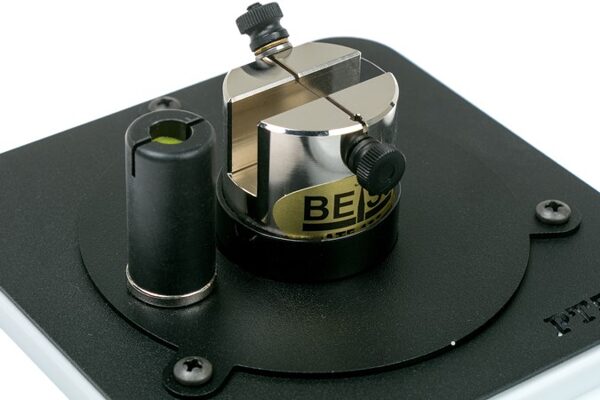
Sharpness testers use monofilament nylon fishing line as a cutting medium, strung at a known tension horizontally across a narrow gap. The blade to be tested is lowered at a specific angle against this filament, and force is applied until the line is cut. The lower the required force, the sharper the edge.
All materials are going to have a limit to how sharp they can be. It’s a function of microscopic grain structure and purity, combined with apex radius, edge geometry, heat treatment, surface chemistry, and some elven magic.
But Chris, you say, surely there must be a clear winner in the “Who’s the Sharpest of Them All?” contest? Yes, there is, and it’s been around longer than we have. It’s called obsidian, black volcanic glass, and a fresh edge can be as thin as 3 nanometers.
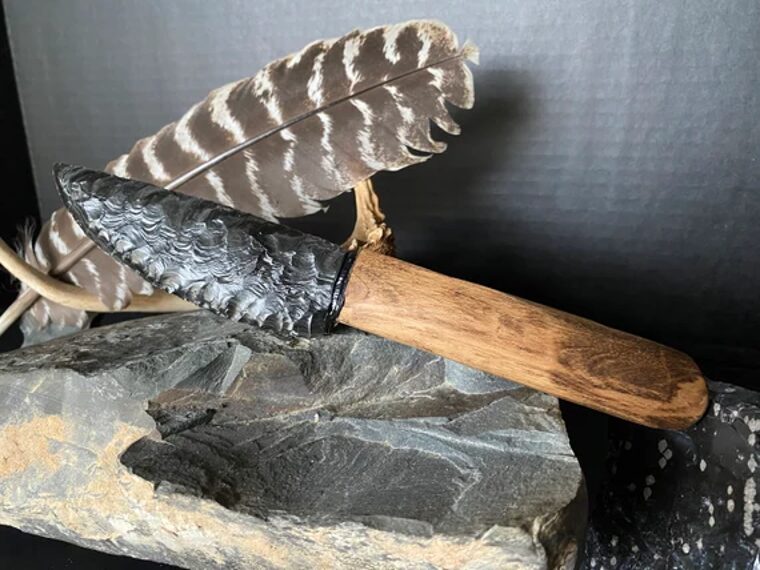
That’s scary sharp, folks, at least 10 times better than the finest surgical scalpel and maybe 500 times more keen than your typical sharp pocket knife.
And of course it’s very brittle, snapping off at the slightest provocation, so it’s only used for the most delicate slicing work (or for killing off White Walkers, but that’s for another post).
Back to steel. Around here we say there’s no difference between a dull knife and a spatula, and spatulas have a hard time cutting through anything. Therefore, learn to keep your blade keen.
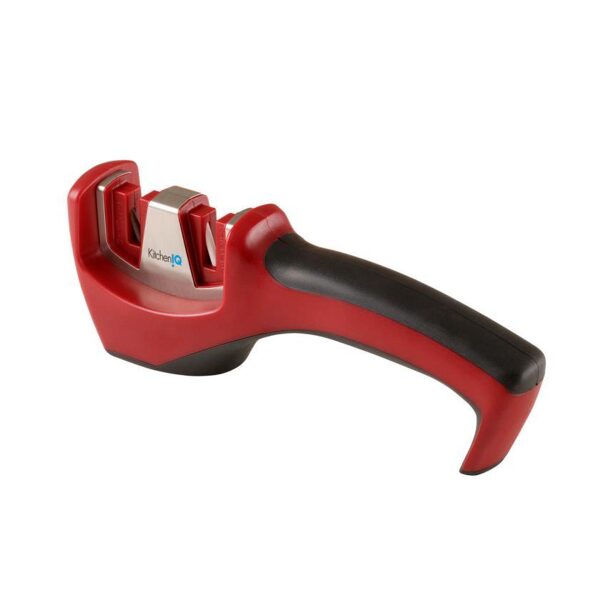
First of all, if you have one of those pull-through sharpeners you sometimes find in kitchens – you know the ones with the V-shaped slots holding ceramic rods or wheels – well, here’s what professionals do. First, pick it up very carefully between thumb and forefinger. Next, gently place it in the nearest trash bin, never to be thought of again. They destroy blades and the people who invented and marketed them should be ashamed or in prison.
Now, you may have seen many different ways that people sharpen their steel, including files (ugh), sanding belts, sharpening rods, grinding wheels, and of course natural and ceramic sharpening stones.
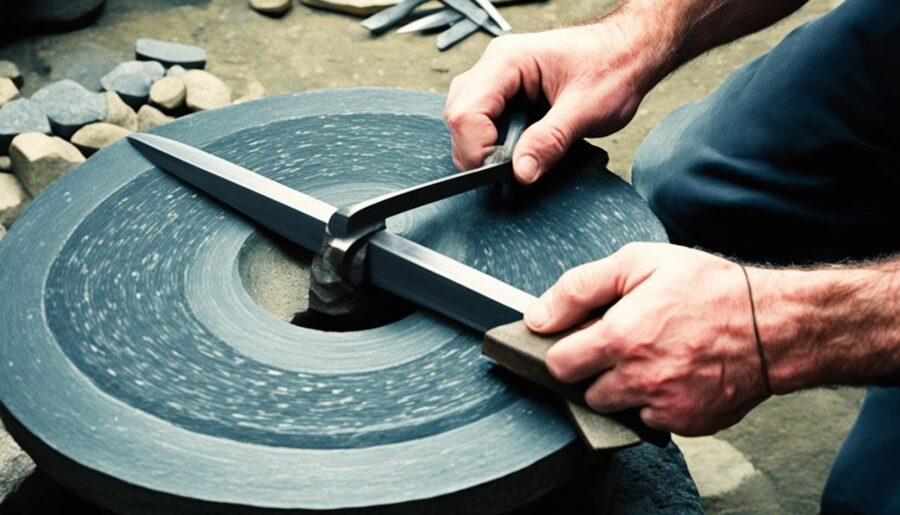
Each method has its adherents and hey, knock yourself out. What they’re all trying to achieve is an edge profile of 17~22 deg. per face, or about 35~44 deg. inclusive for general-purpose, pretty-darn-good sharpness. Remember that this needs to be done without overheating the metal which can destroy its temper. Lubricating fluid, oil or water depending on the type of abrasive, is used to wash away swarf while also keeping the blade cool.
In traditional sharpening you move the blade across the abrasive medium yourself, grinding the edge on the push stroke or the pull. I used to be a push stroke guy myself but I’ve now seen the light and I ask the universe to forgive my ignorance. You might use an angle guide to help you hold a perfect fixed angle to the stone, very useful for chisels, planes and other woodworking hand tools.
In some new-fangled sharpening systems it’s the blade that’s fixed in position as the abrasive stone is moved back and forth while mounted on an adjustable armature.
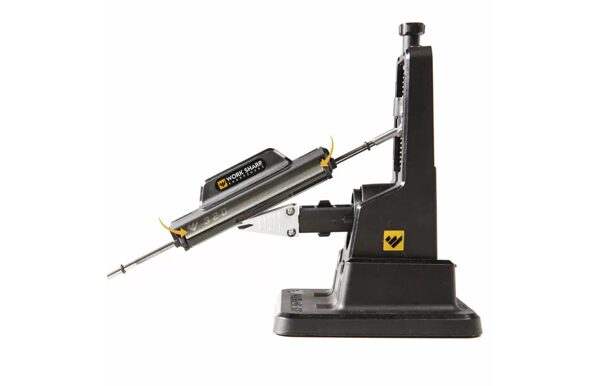
These systems are great for holding a consistent angle and for controlling pressure. It’s smart and it works well – I have one for large blades and tools. But I also consider it sort of cheating. It just doesn’t feel – oh, I don’t know – samurai.
Instead, I prefer old-school. I set the edge by hand using Japanese ceramic whetstones, starting at 1,000 grit, then moving up to 2,000, then 10K, and a final hone with a proper traditional Japanese clay water stone.
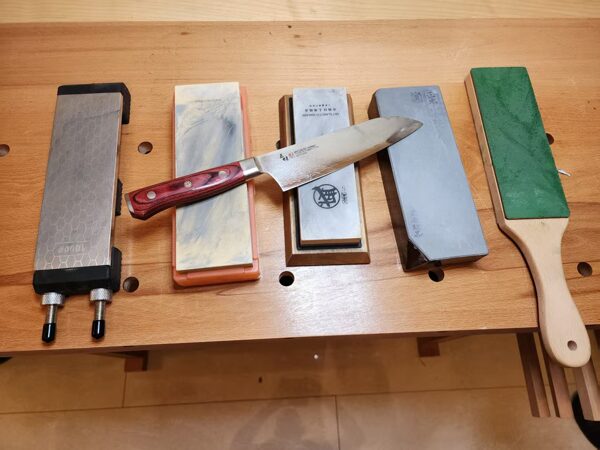
I love this stone beyond all reason. I want to find excuses to use it. I will die long before it wears out. It’s the color of raw uranium and just as heavy. It can easily live through many more lifetimes.
And it’s not really a stone at all. It’s a thick clay brick mined from a Japanese mountainside, composed of ancient organic deposits laid down over millions of years, compressed into something just less than rock hard. You use it very wet, and it makes a nice coffee-colored slurry that cleans and polishes the blade while washing away the swarf. Finally, strop the blade on a leather paddle infused with polishing compound and you’re done.
Do I always maintain a perfect and consistent angle? Probably not. Does the blade come out whisker-whittling sharp every time? Nope. In a very real sense that’s not the point, or at least not the main point. I want a cutting edge, sure, but I’m looking for something else.
It’s an art form, a meditation, connecting me with the task at hand as I pursue a form of perfection I will never attain. In other words, samurai.