
Precision Titanium CNC Machining Services

Procision Manufacturing is a class-leading provider of multi-axis titanium CNC milling and turning services. Consistently high tolerances on even the most complex features are ensured by our unique combination of advanced equipment, skilled machinists and disciplined tooling strategies.
 
Grade 5 titanium machining capability
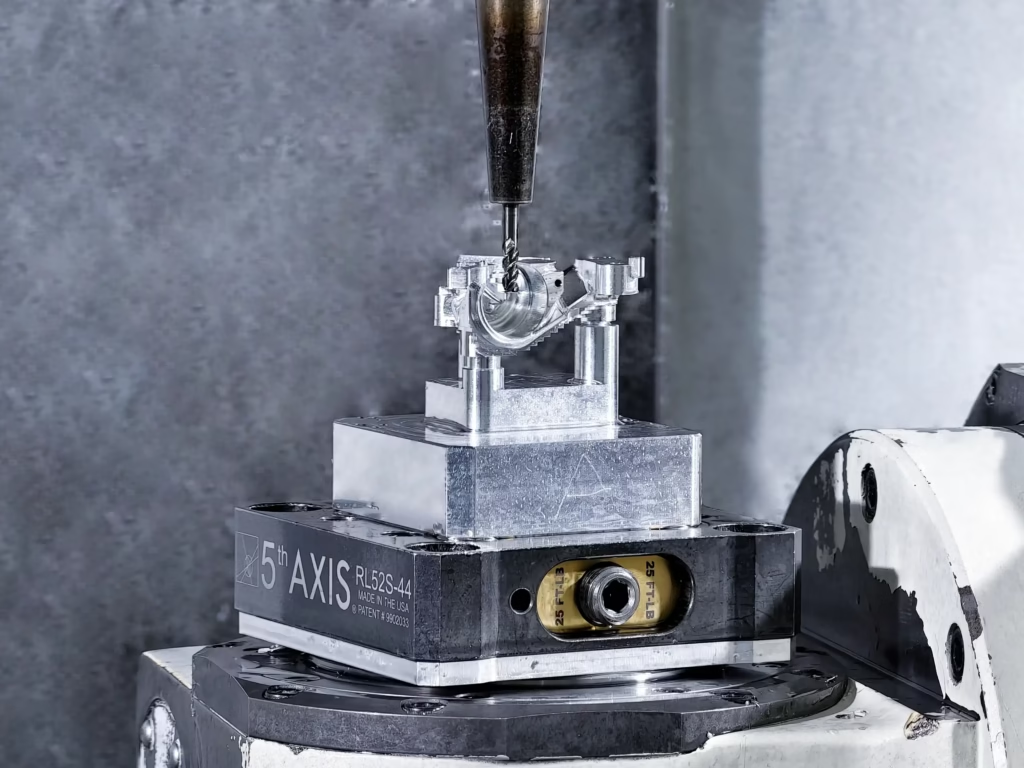
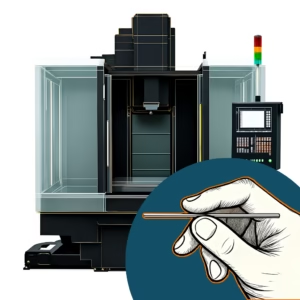
Titanium CNC Machined Part on the CNC milling lathe

Step 1

Upload Design

Begin your project by selecting a manufacturing process and uploading your design file.

Step 2

Quote & DFM

Receive a detailed quotation and Design for Manufacturing analysis upon acceptance.

Step 3

Manufacturing

After receiving your order, we’ll begin manufacturing your exceptional parts or prototypes. 

Step 4

Shipping

We will ship your custom made parts delivered on-time anywhere in the world. 

CNC Titanium Machining Applications

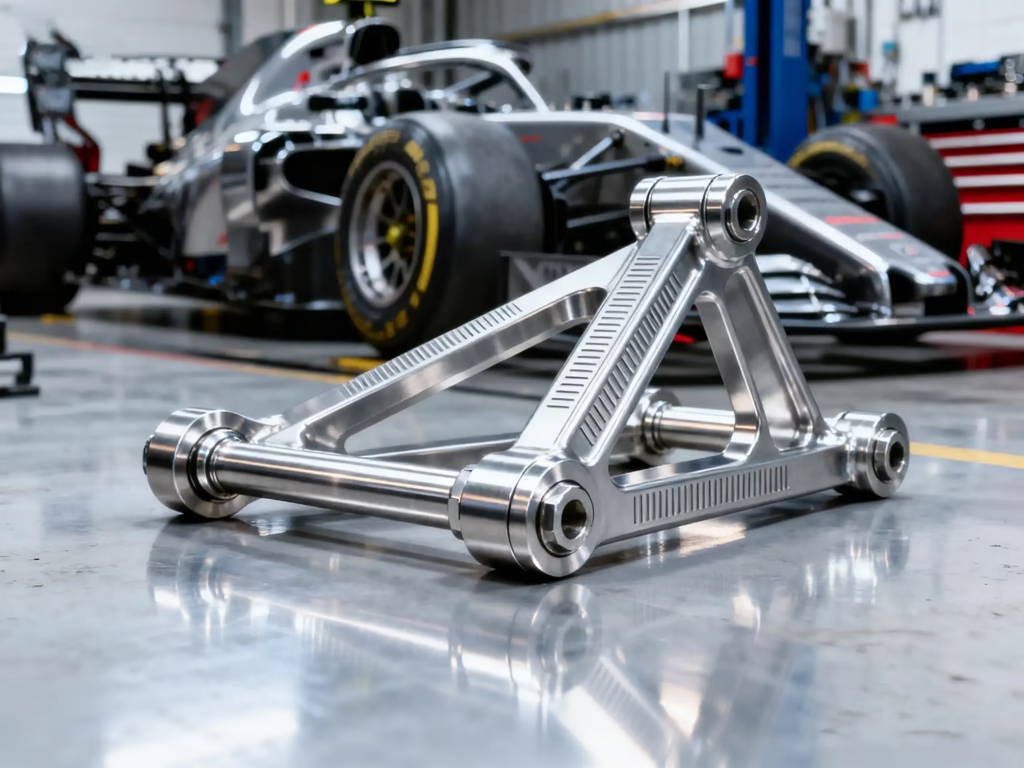
Examples: Fasteners, brackets, pressure vessels, impellers and rotors, pump bodies, surgical instruments, implants.
 
Industries served : Aerospace, medical, motorsport, chemical processing, oil and gas, etc.
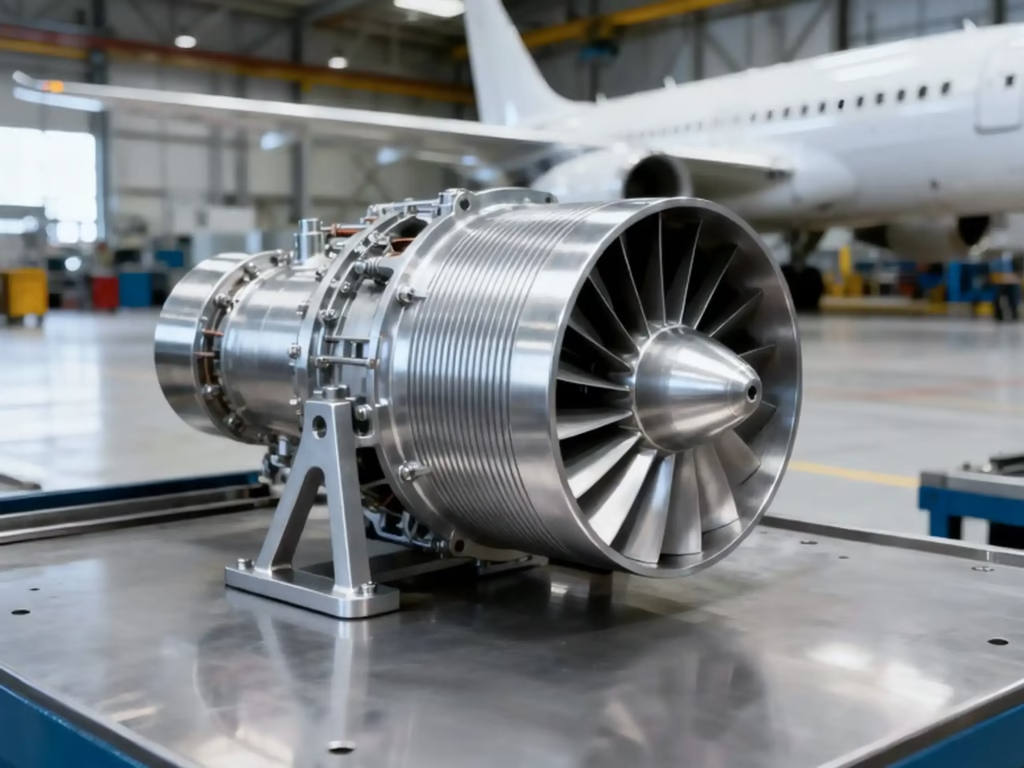
CNC Titanium parts for aerospace
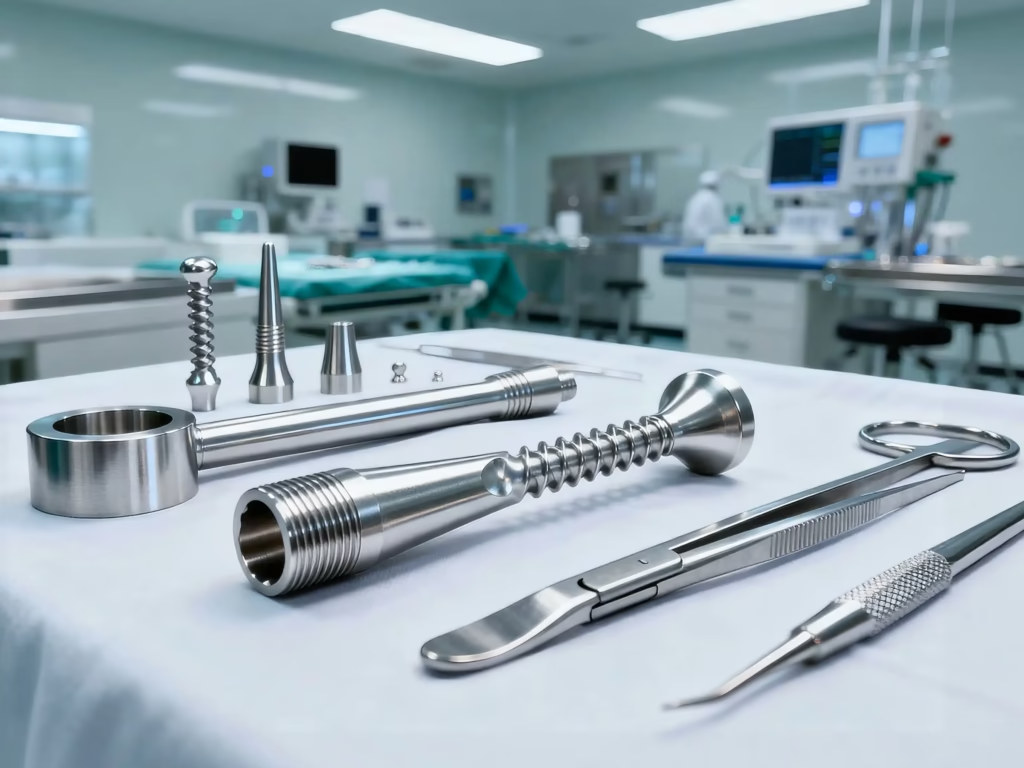
CNC titanium machining applications formedical

Titanium Alloy CNC Machining Properties

Material NameDensityHardnessTensile StrengthWeldabilityMachinability
Ti-6Al-4V Grade 54.5334 Hb950 MPaGood22%
Ti-62424.5360 Hb1000 MPaPoor18%

Comparing Titanium Alloys for CNC Machining

Titanium Ti-6Al-4V Grade 5 is the most common alloy we use every day. It’s not processed the same as Ti-6242, which takes even more careful preparation that can affect lead time and cost. Here are the factors that our skilled technicians must control:
 

Ti-6Al-4V Grade 5

  • Low conductivity concentrates heat at the cutting edge
  • Tends to work harden
  • Chemical reactivity increases tool wear
  • Needs rigid setups and sharp tooling
  • Chip evacuation is critical


Ti-6242

  • Higher strength and creep resistance
  • Greater tool wear and heat buildup
  • Requires careful speed control
  • Must use premium tooling
  • More expensive
 
Grade 5 is used in standard or volume production, while Ti-6242 is the prefered choice when greater thermal stability and creep resistance are a priority over cost and production lead time.
To get an accurate quote please include:
  • CAD: STEP/IGES + PDF drawing (if any)
  • Quantity (prototype + annual volume)
  • Titanium grade (if unknown, we can recommend.)
  • Critical tolerances + GD&T notes
  • Finish requirements (e.g., anodizing type/color)
  • Certifications needed (ISO/AS, COC, material cert, FAI)
  • Target delivery date + shipping destination

Titanium High Precision Machining Capabilities & Tolerances

Multi axis CNC milling and turning centers
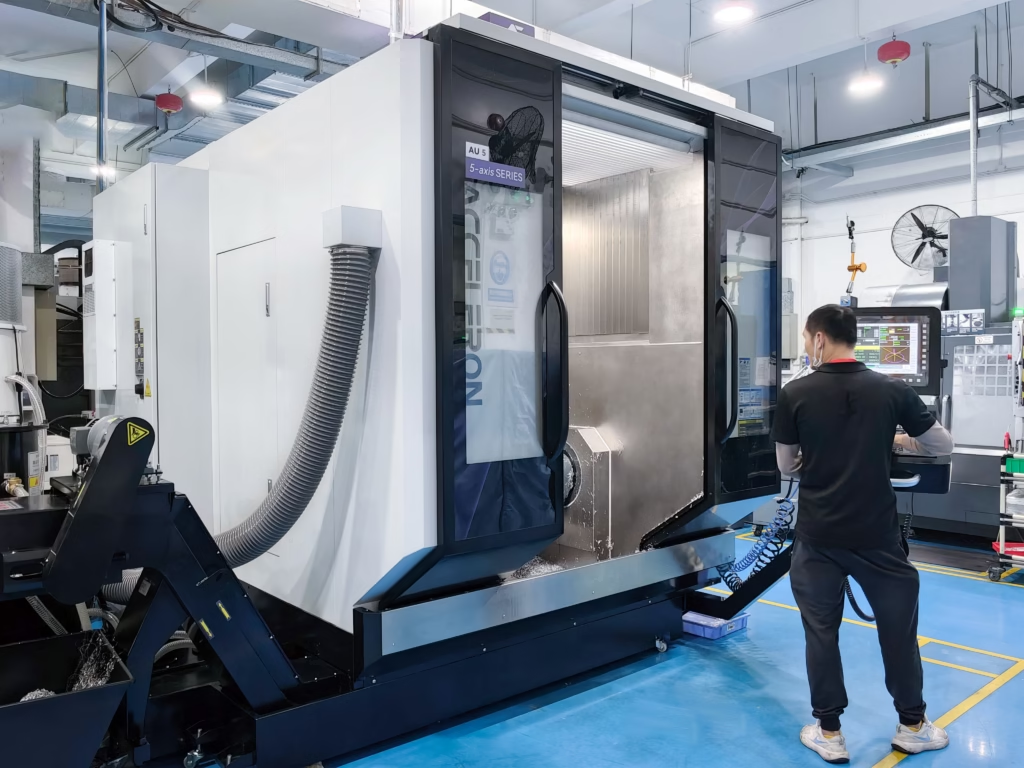
Sophisticated, multi-axis machine tools are able to hold tight tolerances over their full range of motion, while reducing set-up and changeover times to a minimum. Procision has more than thirty vertical and horizontal milling and turning centers running on advanced software to produce exceptional custom CNC machined titanium parts in any volume with no minimum order restrictions.
5-axis machine for custom CNC machined titanium parts

7 axis Swiss-type turning center with bar feeders
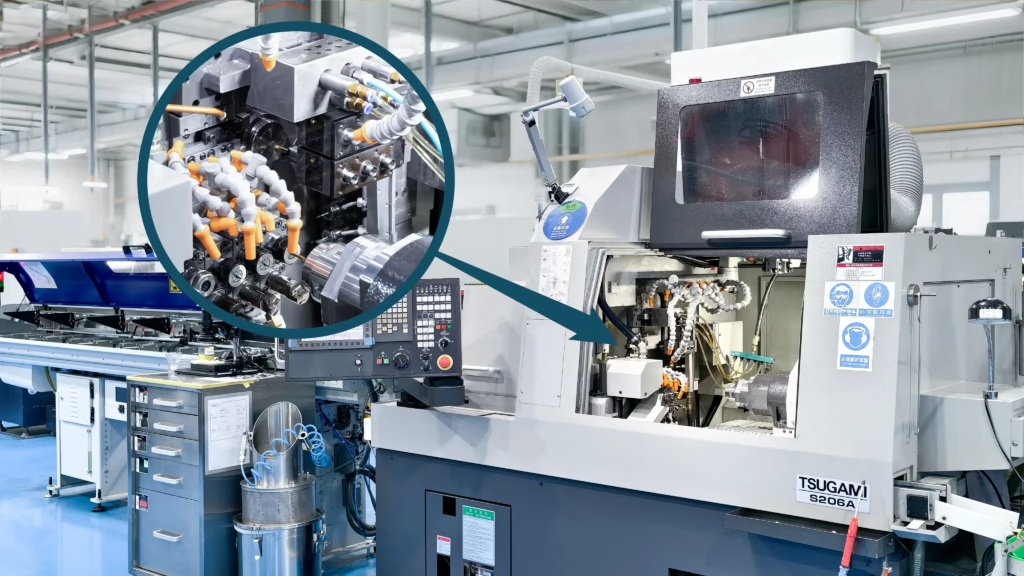
For high-volume production of small titanium turned parts, six- and seven-axis Swiss-type CNC turning centers with automatic bar feeders are the machines of choice. They provide exceptionally close tolerances on micro-sized titanium parts used for next-generation applications.
Tsugami CNC turning center on the production floor

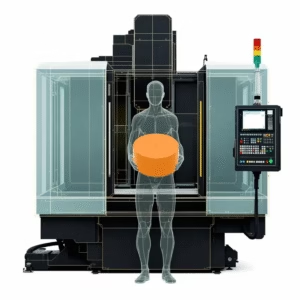
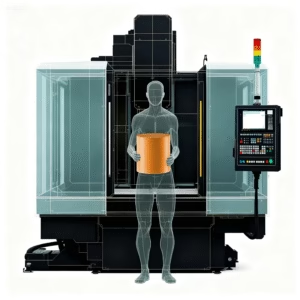
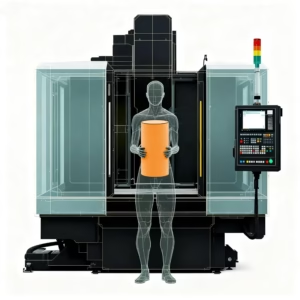
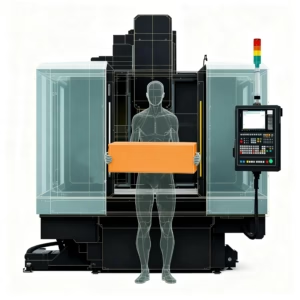
Max CNC Part Envelope

Consult the following guide for a general overview of the practical size limitations for each of our machines. Please note this is for reference only, and exact dimensions are highly dependent on specific part geometry and features. Please contact us to discuss your project in detail.

Our Titanium CNC Milling Centers

n BrandModelType Envelope
1DMG MORIDMP 70Vertical 5-axis mill
2HaasDT 1Vertical 5-axis mill
2HaasDT 1Vertical 4-axis mill
5HaasDT 2Vertical 5-axis mill
2HaasDT1Vertical 3-axis mill
1PRIMINERU500Vertical 5-axis mill
1HaasUMC-750Vertical 5-axis mill
3HaasVF-2SSVertical 5-axis mill
4HaasVF-2SSVertical 4-axis mill
1HaasVF-2SSVertical 3-axis mill
2HaasVF-4SS-VVertical 5-axis mill
1HaasVF-5/40Vertical 3-axis mill
1HaasVF-5SSVertical 3-axis mill
4FeelerVMP23AVertical 3-axis mill

CNC Turned Titanium Parts

For all turned parts, the maximum diameter is determined by the size of the chuck or collet, while the minimum for all machines can be as small as 1mm.

However, this depends on material and application, so it’s best to speak to our engineers to confirm your project requirements.

QTYBrandModelType Envelope
1Tsugami
(7-Axis)
SS327- IIISwiss Lathe
1Tsugami
(6-Axis)
SS206Swiss Lathe
1DoosanLYNX234Lathe
1Haas
(with barfeeders)
ST-20YTurn Mill

Standard vs. High Tolerance Specs

On most projects we comply with these accepted international standards for machining tolerances.  
 
ISO 2768-1 (linear & angular dimensions) covers the classes of f, m, c, and v, where f = fine or the highest general class.
 
ISO 2768-2 (general geometrical tolerances) refers to the classes H, K, and L, where H is the highest.
 
Even more precise titanium machining tolerances can be achieved on a feature-by-feature basis. Book a discovery call for a free project review.  
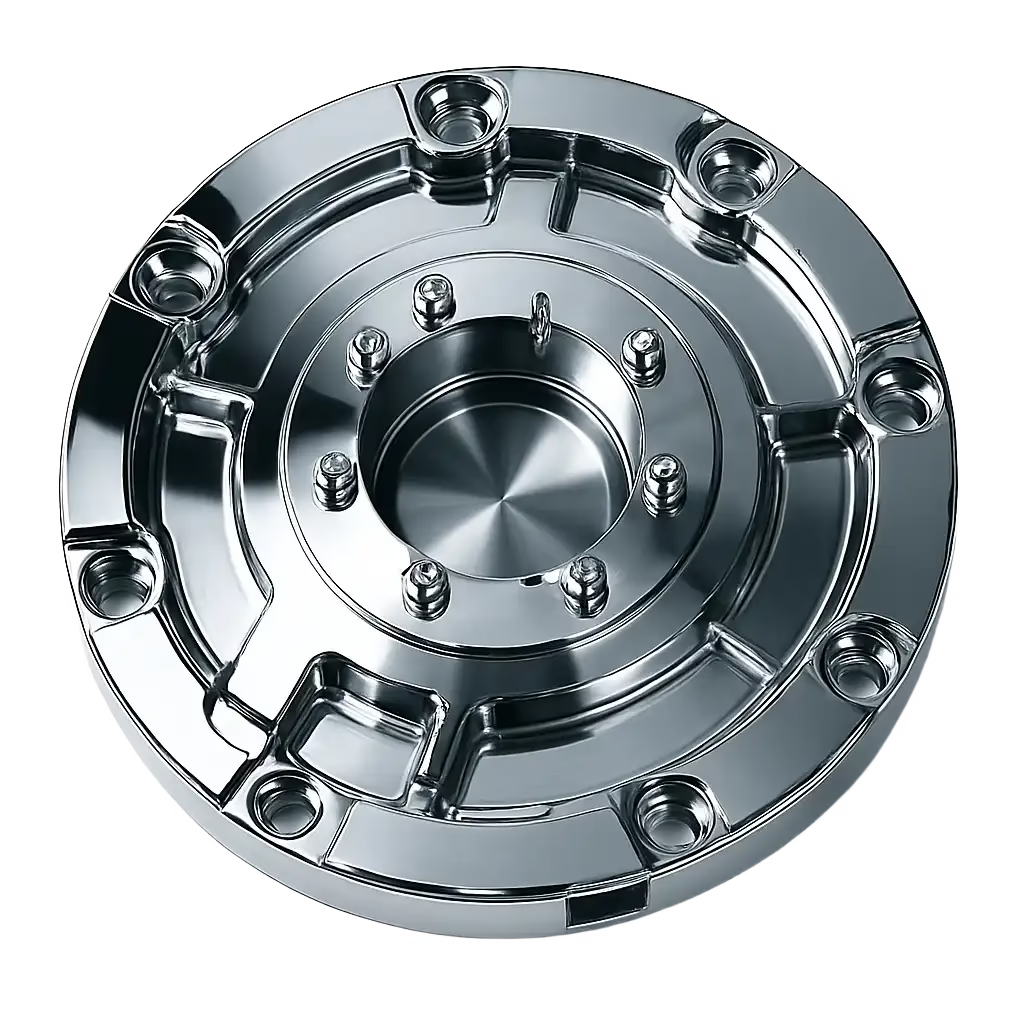
Chrome plate part

We are a team of technical professionals ready to assist you.

How it's done

How Procision Solves The Challenges of CNC Machining Titanium

High Heat Resistance

  • Challenge: High heat resistance means that titanium doesn’t weaken as it gets hot – this entails higher cutting forces.
  • Solution: Coolant flow, rigid machinery.

Low Thermal Conductivity

  • Challenge: Low thermal conductivity means that heat accumulates at the cutting edge, increasing tool wear and edge failure.
  • Solution: Sharp cutters, optimal toolpaths, coolant flow.

Chips

  • Challenge: Chips tend to gall – or build up on the cutter – leading to excessive tool wear, poor surface finish and inconsistent tolerances.
  • Solution: Coolant flow and adequate chip clearance.

High Elastic Modulus

  • Challenge: Titanium has a high elastic modulus, so it deflects from the cutter more than other materials.
  • Solution: Optimal tool paths, workholding strategies.

Finishing and Treatment at Procision
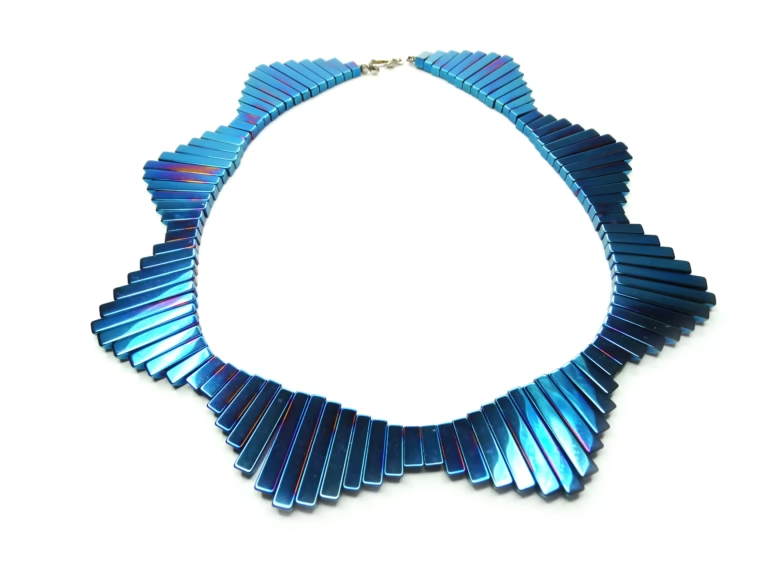
titanium part with surface finishing - anodizing
Procision can provide titanium surface finishing services and more. 
 
Just contact us to discuss your exact needs.

Anodizing

Several different surface treatments are available to enhance the appearance and performance of your custom titanium parts. Note that titanium behaves quite differently from other metals and some treatments, such as chrome plating, aren’t suitable for this material.
Anodizing creates a thin surface layer of TiO2, improving titanium‘s resistance to certain alkalis and acids and enhancing biocompatibility. Color results from optical interference, not chemical dyes. The anodized layer on CNC parts doesn’t improve wear resistance, however, and it also reduces electrical conductivity.

Plasma Vapor Deposition (PVD)

Very commonly used on titanium, PVD coatings are formed by vaporising a target material in a vacuum chamber. The resulting plasma cloud readily adheres to titanium’s surface at the atomic or molecular level.
There are several types of PVD coatings including TiN, CrN, AlTiN, and DLC. They’re used to improve titanium’s hardness, temperature resistance, corrosion protection, and to reduce friction.

Chemical Vapor Deposition (CVD)

Similar to PVD, but makes a thicker and more durable surface coating. This is typically done on titanium cutting tools to improve hardness and wear.

Nitriding (Plasma / Gas)

Nitriding dramatically improves surface hardness on titanium used in extreme conditions, which is why you’ll find it on aerospace components and industrial machine fittings subject to heavy wear and abrasion.

Painting

The natural oxide layer on titanium makes it more difficult to get good adhesion. But with careful and aggressive surface preparation painting is possible, and is mostly used only for cosmetic purposes rather than enhancing performance.

FAQs

What makes titanium so difficult for machining?

Titanium is difficult to machine for several reasons: heat tends to accumulate at one point; galling; high hardness and strength; extreme elasticity; surface chemistry (oxide layer).
The right titanium alloy depends entirely on your application. You should consider chemical exposure, cyclic or constant loads, abrasion, heat resistance and ultimate tensile strength.
Titanium alloys combine light weight, strength, corrosion resistance, thermal stability and biocompatibility. No wonder this versatile metal is used in aerospace, science and research, medical, automotive, consumer electronics and heavy industrial applications.
Because of its high temperature resistance and creep resistance, titanium typically doesn’t warp when being CNC machined.
The most common grade is Ti-6Al-4V Grade 5, generally used for relatively high volume production. It has the most stable and predictable performance characteristics.
Titanium is stronger than many steels by weight, but not necessarily stronger in absolute terms. It is roughly 45% lighter than steel while maintaining comparable strength in many alloys.
No. Titanium is heavier than aluminum (≈4.5 g/cm³ vs. 2.7 g/cm³), but it is significantly stronger, allowing thinner sections to be used in structural designs.
Yes. Titanium anodizing is common and produces color through oxide thickness, not dyes. It improves corrosion resistance and is biocompatible but does not increase hardness.
No. Titanium does not rust. It forms a stable, self-healing oxide layer that protects it from corrosion, even in saltwater and many chemical environments.

Let's Build What's Next - Together

Whether you’re building one part or one million, the Procision team delivers consistent results — on time, to spec, and built to perform. Request a quote today and discover what a responsive, professional manufacturer can do for you.