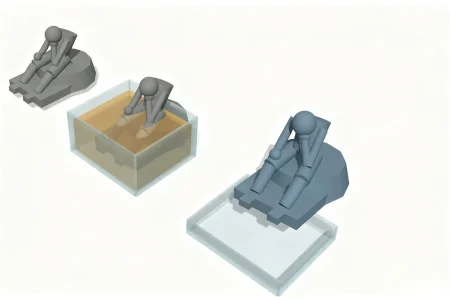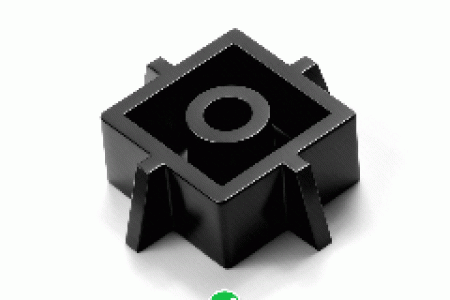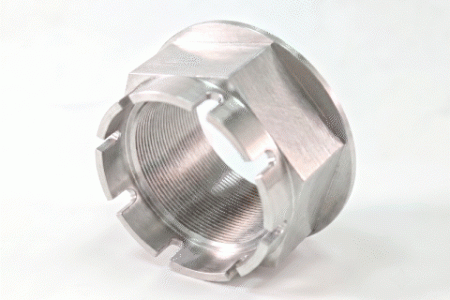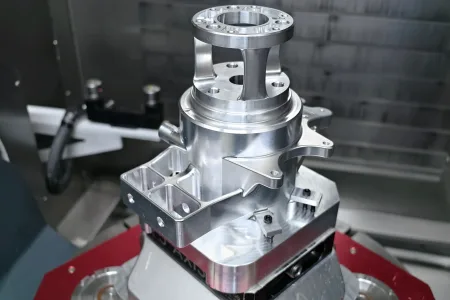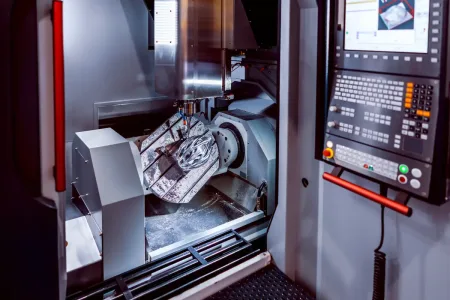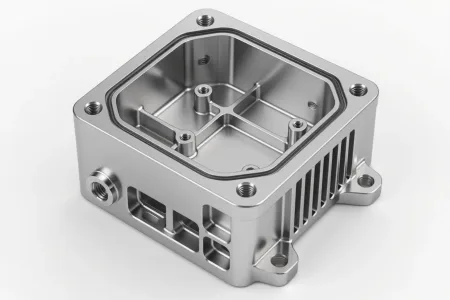

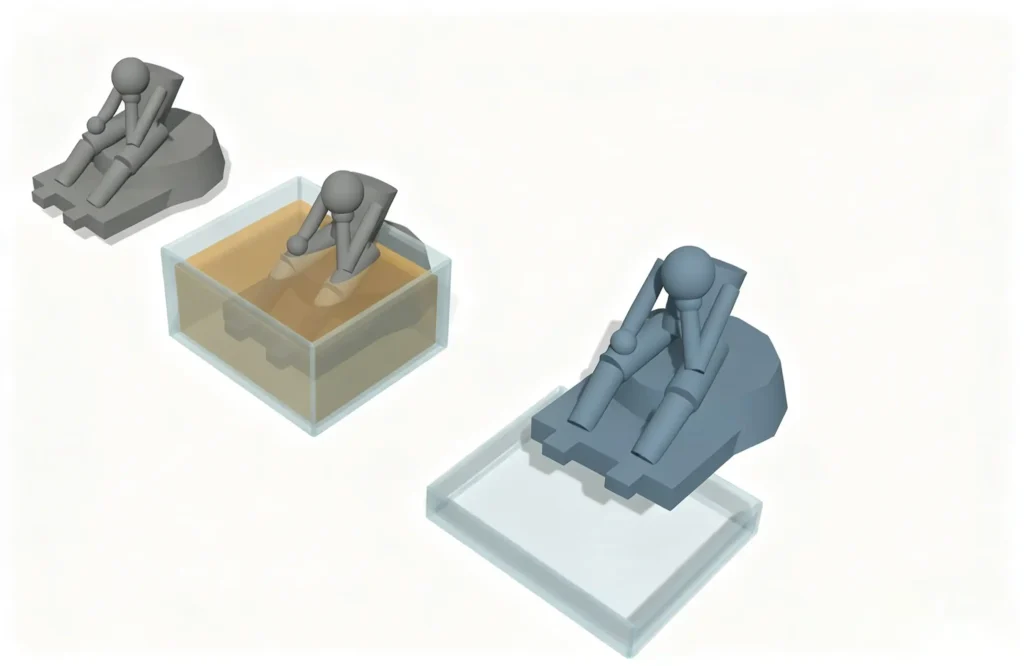
Polyurethane vacuum casting is a rapid prototyping process used to make small volumes of high-fidelity copies of a master pattern. It uses pourable casting resins that mimic the look and feel of plastic injection molding at a fraction of the time and cost.
What is a Polyurethane Vacuum Casting Master Pattern?
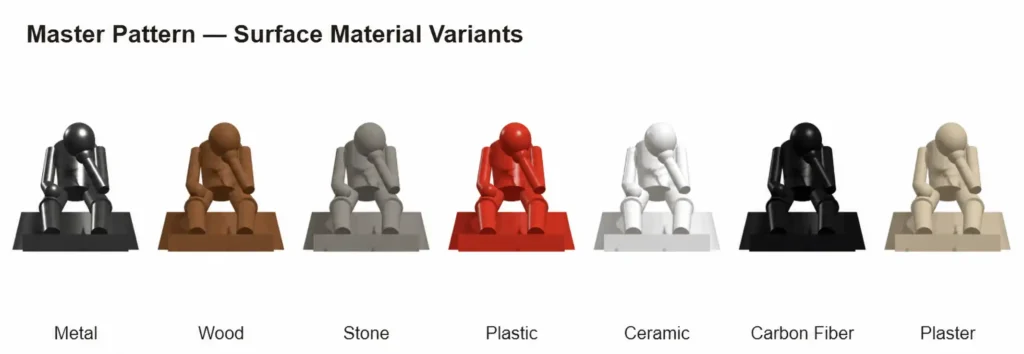
A polyurethane vacuum casting master pattern is a solid 3D replica of the intended finished part. They can be made from any rigid material that’s able to hold dimensional stability at temperatures of 100°C during the curing process.
Why are Master Patterns Important?
Master patterns are important because silicone casting molds are formed directly from them, and the silicone captures all surface details with high fidelity. Fine textures, scratches, blemishes, dimples – all are reproduced perfectly and are transferred to the cast part. That means your pattern must accurately represent what you want your part to look like.
How are Master Patterns Made?
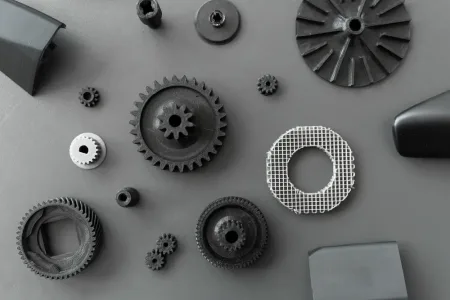
Master patterns don’t depend on any specific manufacturing method, so they can potentially be made via CNC machining, 3D printing, plaster casting, even by hand. The optimal choice depends on your application and requirements. Use this chart to help guide your decision.
Master pattern manufacturing methods comparision
| CNC machining | 3D printing | Plaster casting | |
|---|---|---|---|
| Cost | 3 | 2 | 1 |
| Development lead time | 3 | 2 | 2 |
| Surface finish quality | 1 | 2 | 2 |
| Dimensional accuracy | 1 | 2 | 2 |
| Complexity capability | 2 | 1 | 2 |
| Scoring key: 1 = Best, 2 = Moderate, 3 = Challenging | |||
Note that plaster models are not especially common these days and are often confined to sculptural, architectural or historical reproductions. The advantage here is that they’re easy and inexpensive to make in a small workshop using simple materials and plaster patterns are pretty durable.
Since the first two are the most common in a production environment, we’ll look at those in more detail.
Master Patterns Made by CNC Machining
CNC machining is the most expensive method and has the longest lead time. However, it also produces the tightest tolerances and best surface finishes, often requiring no post-processing. And the patterns are the most durable so they can be used many times without degrading.
Because CNC machining is highly versatile it can work equally well with any rigid substrate. However, remember that these master patterns are only being used as the basis for a silicone casting mold. The best practice is to use a material that gets the job done without being over-engineered.
That means that a simple block of nylon or ABS is more than good enough and helps to keep the cost down. Keep in mind that if you need an exceptional mirror-polished surface, you can also use a block of acrylic or Lexan which can then be vapor-polished after machining. The advantage of vapor polishing is that it can penetrate interior cavities that would be impossible to reach by hand.
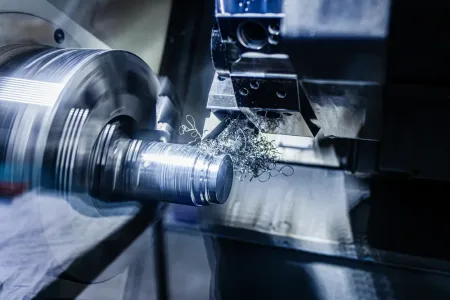
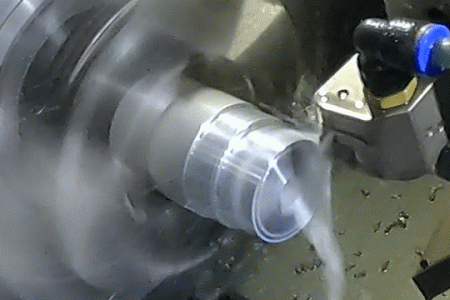
It takes a while to program the G-code for a CNC program, but once that’s done a pattern can be milled or turned very quickly. Of course, CNC machining is highly accurate, so holding millimeter tolerances is easy. Also, by using sharp cutting tools, the surface finish is smooth and ready for casting.
The great value of CNC machining is that it can make very fine surface features such as thin walls, flat prismatic faces, closely spaced ribs, and smoothly bored holes.
Ready to start your polyurethane vacuum casting project?
Upload your drawings for a free quotation from Procision Manufacturing.
Master Patterns Made by 3D Printing
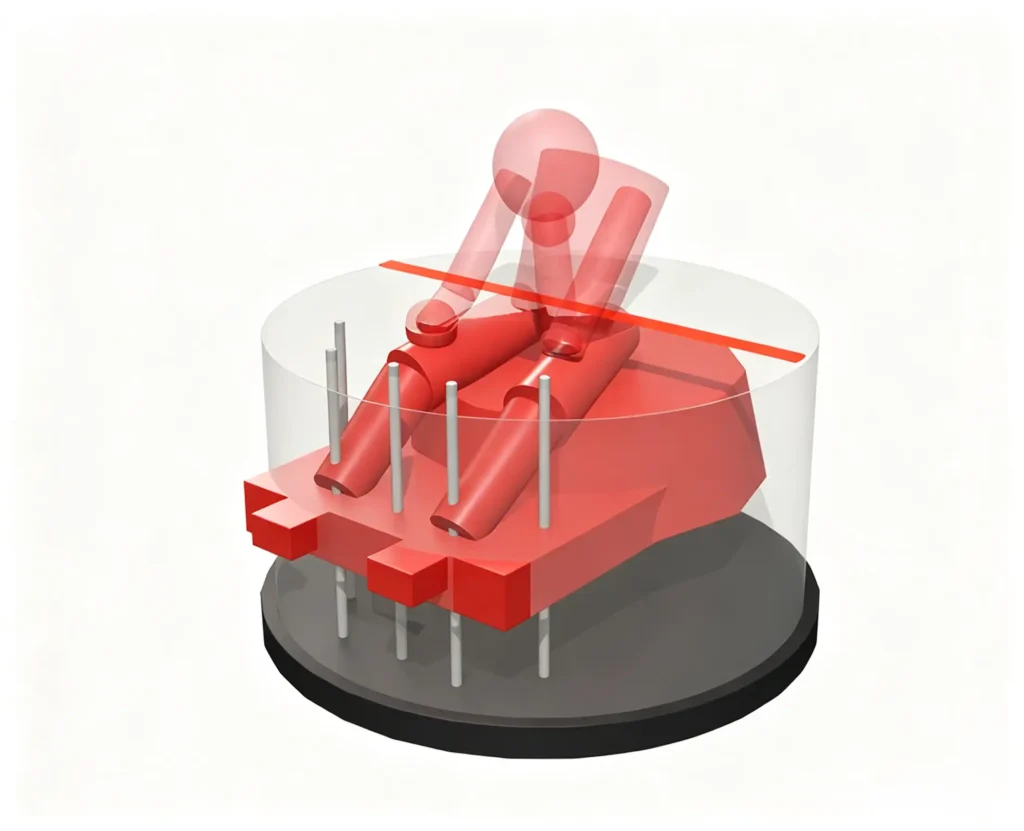
3D printing is the fastest method and has the lowest entry cost. 3D printing is an additive process and isn’t limited by line-of-site restrictions, meaning it can be used to make undercuts and locked features that are impossible to machine.
The three most common 3D printing methods used are selective laser sintering (SLS), stereolithography (STL), and fused deposition modeling (FDM).
All three are cost-effective and it’s now common that even small workshops have their own desktop printers that can quickly produce models. No matter which processes you use, bear in mind that the surface quality is not production-ready and will need finishing services which we’ll discuss in a moment.
One of the most important considerations is the potential shrinkage rate of different resins depending on the process, which needs to be accounted for in advance. Consider these following general parameters.
3D printing shrinkage rates by process
| Process | Shrinkage range | Notes |
|---|---|---|
| Resin (SLA/DLP) | 0.3-1.5% | Typical 0.5-1%; UV exposure and thermal cycling during post-cure affect shrinkage |
| SLS (nylon) | 0.5-2.0% | Nylon ~0.5-1%; higher-temp materials (polyamide GF, PEEK) can exceed 2% |
| FDM/FFF | 0.3-3.0% | ABS and nylon 1-3%; PLA more stable at 0.3-0.5%. Vertical features shrink more |
General guidance for 3D printed master patterns
- Design master pattern geometry oversized to anticipate shrinkage
- Do a test printing and then adjust as necessary
- Lock in the process before committing to a master design
Usage limitations for 3D master patterns
3D printed master patterns have a limited lifespan and so should not be used for larger (10+ pours) production runs.
This is because silicone produces heat during curing which can degrade the plastic resin, especially if it was UV-cured as with SLA. There are also chemical reactions to contend with, as well as the mechanical stress of multiple castings and demoldings.
All of these expose surface weaknesses, promoting fissures, porosity, moisture absorption, degassing and crazing. For larger runs, therefore, consider CNC machined or plaster casting patterns which better resist such assaults.
Preparing Master Patterns for Casting
After a pattern has been machined or printed, it should be carefully inspected for both dimensional accuracy and surface finish.
Surface finishing may involve one of several related processes:
- Trimming away support structures (3D printing)
- Deburring sharp edges (CNC machining)
- Sanding, polishing and media blasting
- Vapor polishing
- Priming and painting
Surface Painting for Master Patterns
Master patterns are almost always primed and/or painted, not to improve their aesthetics but to seal the surface. This decreases porosity and moisture absorption, making the pattern more durable for multiple pours.
In addition, silicone release agent is often used to make demolding easier. A painted surface provides more uniform and smoother surface finishes that helps to demold without damaging the pattern.
Skilled painting technicians can even impart subtle texture effects by painting some areas and leaving others untouched. This is careful work done by only a few specialty shops, such as we do at Procision.
The Importance of Process Control
A professional manufacturer must exercise careful process control to ensure high quality and repeatable results. These are some of the things to look for in a superior service provider.
Climate-controlled workshop
The ambient air temperature and humidity of the workshop should be maintained year-round to prevent excess moisture getting into the pour. Also, a stable, cool and dry temperature helps to promote controlled cooling after the silicone has cured, which prevents thermal damage to the pattern.
Resin chemistry
High temperature engineering resins are a bit more expensive but they’re much more stable than standard resin grades.
Platinum silicone
This is a type of addition-cure silicone compound which cures at a lower temperature than more common condensation-cure types. This lower temperature reduces the thermal stress on the pattern.
Release agent
Applying a release agent after every pour makes demolding easier and prolongs the life of the pattern.
Putting It All Together
Now you can see why it’s important to consider the master pattern from the very outset of your polyurethane vacuum casting project.
The choice of manufacturing method and material will directly impact production lead time and cost, as well as affecting tolerance, durability, surface finish and final part quality.
When you work with an experienced provider of professional polyurethane vacuum casting services like Procision, you’ll get all services in-house including CNC machining, painting, post-processing and more. And of course we’re ideally suited to take your designs from the prototyping stage to full production plastic injection molding.
From raw material to immaculate presentation-quality prototypes, we’ve got you covered. For a free quotation and project review, just upload your CAD files today and see what makes us the superior choice for polyurethane vacuum casting.
Precision starts with collaboration
Upload your CAD files for a quotation and DFM review.