
Why Stress Control Matters in Aluminum CNC Machining
CNC machining is the preferred method for manufacturing precision aluminum parts that have complex features and excellent surface finishes. Engineers often choose aluminum because of its low density, cost-effectiveness, and favorable mechanical and thermal properties.
Aluminum alloys have an excellent strength-to-weight ratio and naturally resist corrosion, making them a perfect choice for automotive, architectural, marine, and aerospace applications. In its pure form, aluminum is soft and ductile, so alloys are created to enhance its strength and other characteristics.
Compared to steel, aluminum’s low density provides superior strength-to-weight, making it ideal for applications where reducing weight is critical.
However, design engineers need to be aware that aluminum is also a great conductor of heat, which means parts can warp during production due to the build-up of mechanical and thermal stress.
When dimensions are even just a few microns out of tolerance, the result is costly rework, delays, and disrupted production schedules. That’s why controlling stress isn’t optional, it’s essential.
Product engineers want parts on spec the first time, so the best strategy is to work with a professional custom parts manufacturer who uses good design and manufacturing strategies to keep material deformation under control. Here’s how we do it at Procision.
Material Selection: The Foundation of Precision CNC Aluminum Machining
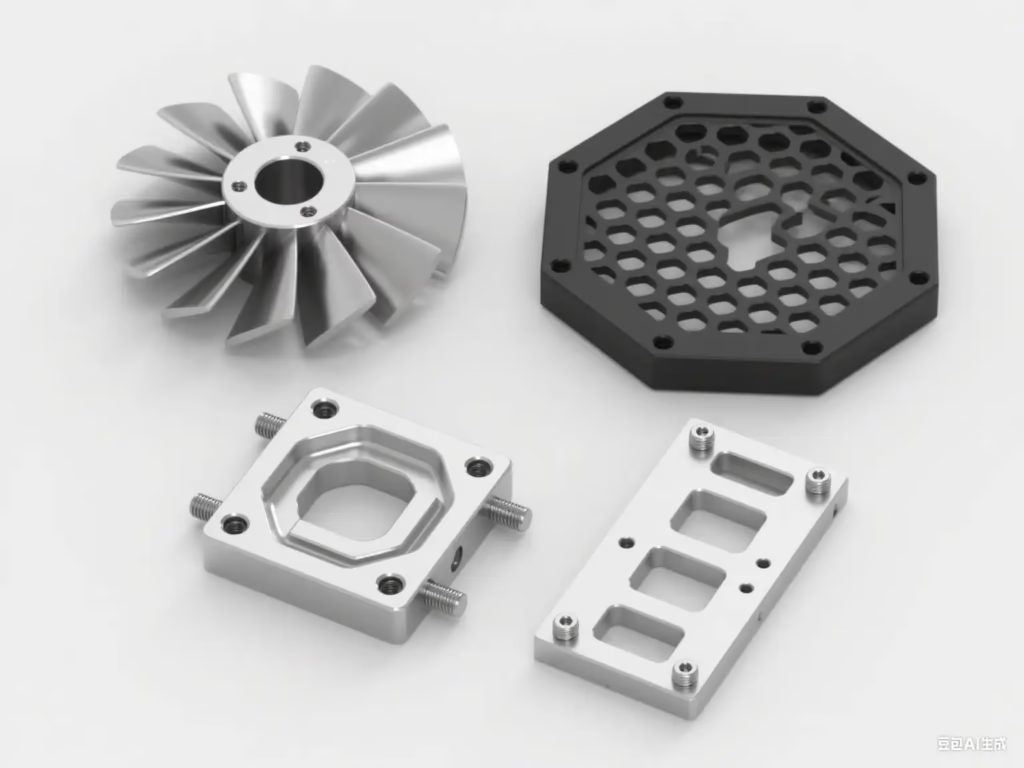
Every grade and temper of aluminum alloy has unique mechanical and chemical properties which determine how the material responds when being CNC machined.
Among the most popular aluminum alloys are 6061 and 7075. These alloys offer good corrosion resistance, high strength and machinability, making them ideal for aerospace, automotive, and marine applications.
The primary alloying element, such as magnesium in 5052, zinc in 7075, or copper in 2007, directly influences its properties and suitability for specific uses. Many of these alloys are heat treatable, and when heat treated, their tensile strength, hardness, and other mechanical properties are significantly enhanced.
Some high strength alloys, like Aluminum 7075, even have hardness comparable to certain steels, making them suitable for demanding, load-bearing applications.
For these reasons, responsible manufacturers should always perform a careful Design for Manufacturability review to ensure the alloy fits the application. This definitely should include consideration for how the raw material was made.
Ready to machine precision CNC aluminum parts with confidence?
Upload your drawings for a free quotation from Procision Manufacturing.
How the raw material manufacturing process alters stress characteristics.
To understand the importance of the manufacturing process used to make the raw stock, consider two blocks of AL-6061 alloy. Although each contains the same chemical recipe, one was formed by casting and the other by extrusion. Are they they same? No, and here’s why.
In the former case, the crystalline grain structure is amorphous and without orientation, making it impossible to accurately predict how it’s going to react to thermal stress. With the extruded sample, the grains are forced into alignment in one direction. This means it expands and contracts in a much more consistent and predictable way, and that in turn provides more controllable results.
In addition, aged aluminum – regardless of how it was made – is more “relaxed”, meaning internal stresses have had time to dissipate. This provides even more stability when being fabricated.
Only after considering all of these factors, including alloy grade, temper, age, and processing method, should the design requirements be addressed.
Five Proven Design Optimization Tips for CNC Machined Aluminum Parts
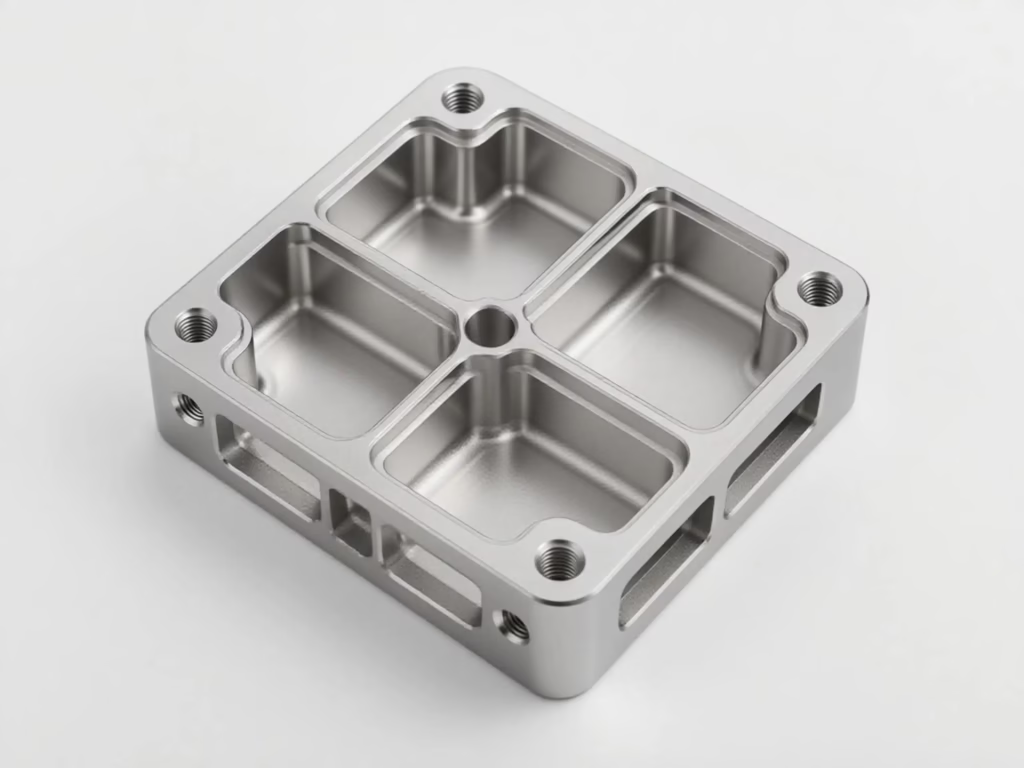
Once the material has been carefully analyzed, the manufacturer and the product developer should work closely together to optimize the design files and specifications.
The goal is to minimize the potential for creating thermal and mechanical distortion while still preserving the part’s functionality. Here are five practical ways we try to do that on every project.
1. Limit cavities to reduce internal stress
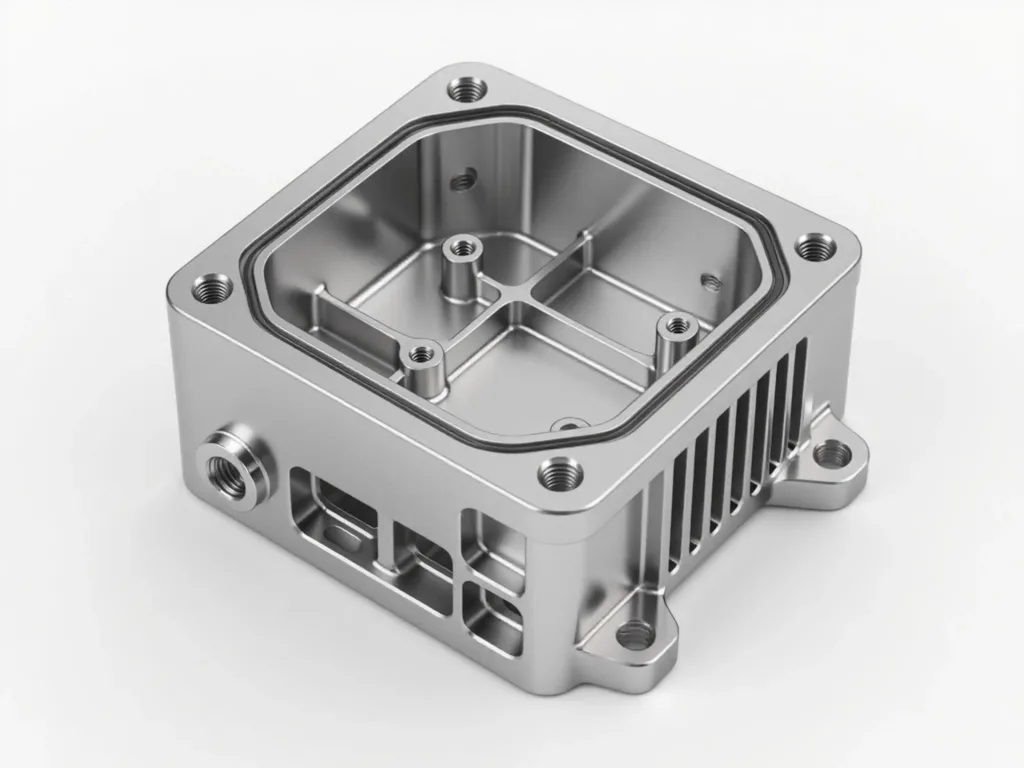
Whenever you remove large amounts of material from a block of aluminum it creates internal stress that can lead to warping. We recommend reducing the size and number of cavities if possible. If that’s not possible, then prioritize symmetry.
2. Design for symmetry to balance stress
Symmetrical features balance mechanical and thermal stress, where the distorting effects of material removal in one area are cancelled out by an equal but opposite effect in another.
3. Strengthen designs by avoiding thin walls and abrupt transitions
It’s more difficult to hold precise tolerances on thin-walled features because of the action of the cutting tool and unequal mass distribution. This becomes even more challenging if thin and thick features are immediately adjacent.
Therefore, it’s always best to make gradual transitions between features of different thicknesses and mass. Also, when possible, don’t apply critical tolerances to thin-walled features.
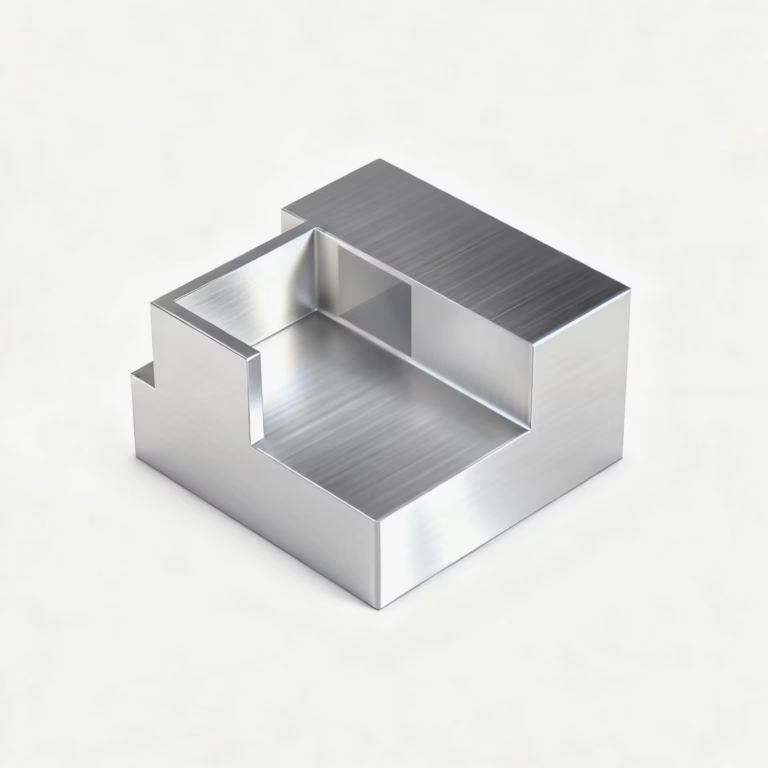
Poor design example: uneven wall thickness and sharp corners
4. Reduce stress concentration with radiused corners
Tight corners are “stress concentrators”. To mitigate this, add large radii to both internal and external corners whenever possible to dissipate the stress over a larger surface area.
5. Streamline critical tolerances for faster, more reliable machining
Critical tolerances push the boundaries of CNC machine performance as well as what the aluminum alloy will tolerate. Eliminating unnecessary critical tolerances makes the part both easier and faster to make while reducing the scrap rate.
Balancing Speed and Precision in CNC Programming
After design optimization, the CNC machine programmer then must consider how best to balance two priorities. The first is to calculate optimal tool paths to achieve the shortest cycle times.
The second is to maintain precision tolerances, and sometimes these priorities are in conflict. Between the two, the emphasis should always be on maintaining precision and part quality first and foremost. After all, it makes no sense to make a part “fast” if it’s out of spec.
7 CNC Machining Best Practices to Control Aluminum Deformation
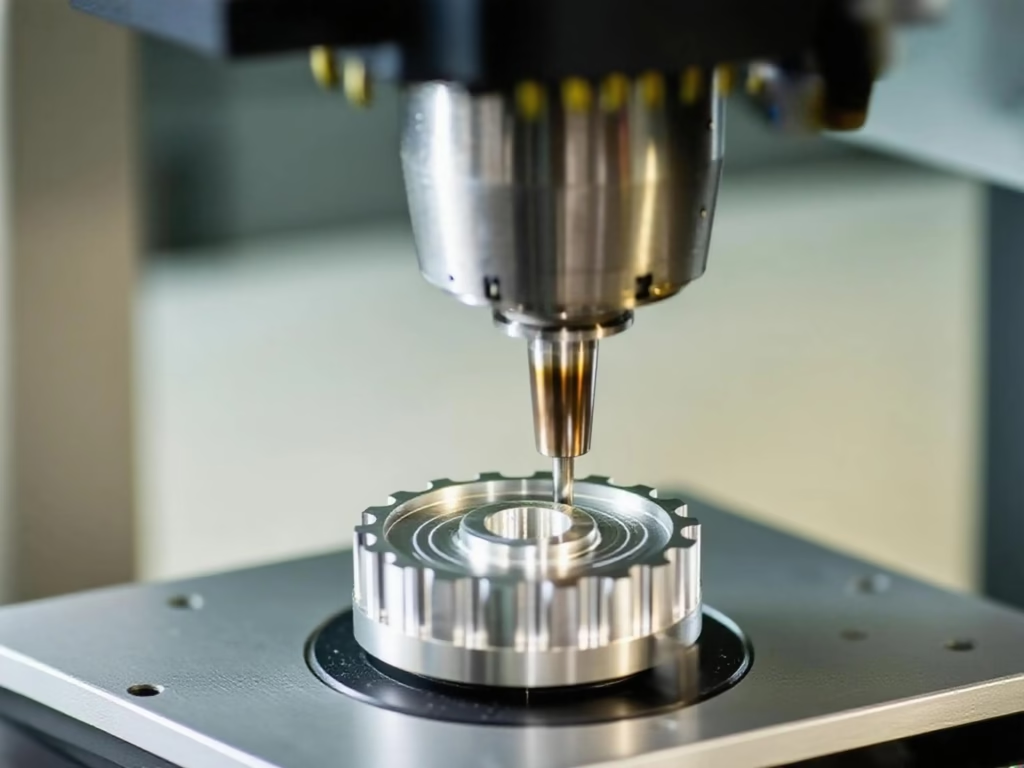
Here are seven best practices good CNC machinists use to manage heat build up and stress to control deformation
Layered machining to reduce heat build up
Consider the workpiece as a three-dimensional block with multiple non-symmetrical features on both the vertical and horizontal axes.
The best strategy is to partially complete each of the features in layers, working from the top down. Contrast this with completing one feature first before moving on to the next, which tends to concentrate excess heat in one place rather than dissipating it laterally.
Multi-step machining of parallel faces for flatness
Precision machining of flat aluminum plates requires extra care. To achieve this, use a multi-step approach:
- Secure the workpiece to the machine table using side clamps, with shims supporting the piece underneath.
- Machine only a small amount from the first face and then flip the workpiece over and machine the opposite face, again only partially.
- Flip the plate over as many as four times before achieving the final specification and tolerance.
Optimize speeds and feeds for aluminum precision
Speed refers to the RPM of the CNC machine spindle, while feed is the rate at which the cutting tool is fed into the workpiece. Optimizing the speed and feed to the aluminum alloy, as well as using the right cutting tool profile and angle, is necessary for achieving precision.
Use roughing and finishing passes to manage stress
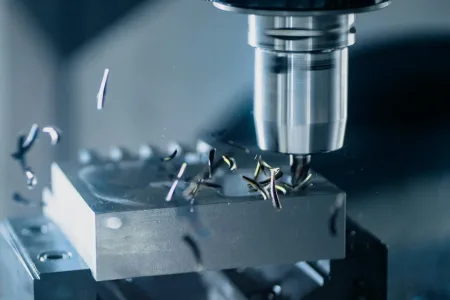
Rough machining uses large, heavy-toothed cutters to remove a lot of material fast to form the basic shape. This can induce thermal hot spots and deformation. For higher precision, the part can then be dismounted and annealed to release stress, after which it can be finish machined.
Finish machining uses finer cutting teeth with more carefully controlled feed rates to prevent further stress build-up.
Sharp cutters for superior surface quality
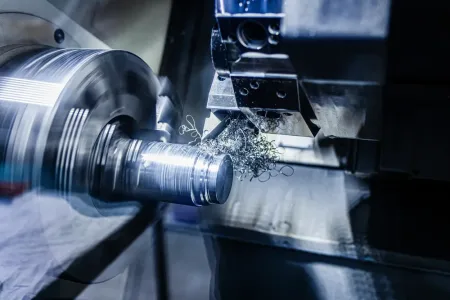
Some aluminum alloys tend to be “gummy”, producing long slivers of waste material that can quickly clog up and degrade cutting surfaces. That means cutters must be changed or re-sharpened frequently to maintain control over surface quality and to achieve precision tolerances.
Workholding best practices for aluminum stability
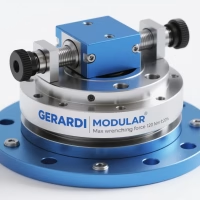
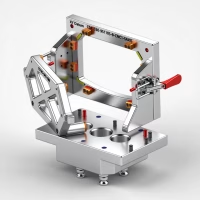
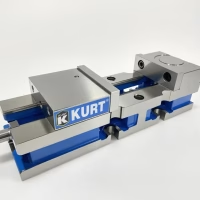
Since aluminum is non-magnetic, it must be held firmly in a workholding tool while being CNC machined. To avoid twisting or distorting the part and losing tolerance it’s best to:
- Use only as much clamping force as strictly necessary;
- Apply clamping force to relatively thick-walled and strong areas rather than thin ones;
- Make a custom CNC fixture to hold the part securely on all sides;
- Use soft clamping jaws or vacuum holding fixtures where possible;
- Dismount and remount a part to release holding pressure. Be aware that this will adversely affect precision tolerances;
- Machine the part from a sacrificial base plate that can be cut away upon completion;
- Secure cast aluminum with a recommended three points of contact. More than this causes the workpiece to twist.
Control climate to maintain CNC precision
Professional CNC machine workshops should be climate-controlled 24/7 to prevent any thermal fluctuations that can adversely affect the equipment and the raw material.
In addition, incoming aluminum raw material should be given at least 24 hours inside the work area to acclimatize with the local environment.
CNC Aluminum Applications: Where Precision and Stress Control Matter Most
In the aerospace industry, CNC machined components are essential for aircraft fittings and structural elements. Here, the need for a high strength-to-weight ratio and natural corrosion resistance are paramount. The ability to produce complex shapes with tight tolerances ensures that every part meets the rigorous standards required for flight safety and performance.
The automotive industry also relies heavily on CNC aluminum for parts that must withstand high stress while minimizing weight. From engine components to lightweight chassis parts, the use of aluminum alloys helps improve fuel efficiency and vehicle performance without sacrificing structural integrity.
Marine applications present another environment where aluminum’s excellent corrosion resistance is critical. Some alloys are highly resistant to saltwater and humidity, making them ideal for boat fittings, hull components, and other marine hardware that must endure harsh conditions.
In the food and pharmaceutical industries, the non-toxic nature and easy-to-clean surfaces of aluminum alloys make them well suited for equipment and machinery.
The electrical industry benefits from aluminum’s high electrical conductivity, so it’s found in connectors, housings, and other components where efficient current flow and corrosion resistance are required. While pure aluminum offers excellent conductivity, it is often alloyed to enhance mechanical properties for specific applications.
Sports equipment manufacturers take advantage of aluminum CNC machining to create lightweight yet robust products such as bicycle frames and other performance gear. Additional surface finishing, such as powder coating or anodizing, can further protect the material while enhancing its aesthetic appeal.
As we’ve seen, selecting the right aluminum alloy for CNC machining involves considering several factors, including the required strength, corrosion resistance, and machinability. For example, alloys with higher magnesium content provide excellent corrosion resistance, making them ideal for marine and outdoor applications, while those with higher copper content offer good fatigue resistance for high-stress environments.
As technology continues to evolve, the ability to produce complex aluminum parts with CNC machines will only expand, enabling manufacturers to meet the growing demands of aerospace, automotive, marine, and many other sectors.
With their combination of high strength, low weight, and excellent corrosion resistance, CNC machined aluminum parts are set to remain at the forefront of innovation across numerous applications.
Achieving Stress-Free Precision in Aluminum CNC Machining
It’s possible to manufacture precision parts with CNC machined aluminum. The secret is careful process control combined with a sophisticated understanding of how the material responds to thermal distortion.
We know it’s unacceptable when critical aluminum parts don’t meet spec. As a professional manufacturing supplier of bespoke CNC aluminum machining services, Procision is here to make your product development journey seamless and stress free. We support all stages of production, from proof-of-concept prototypes to full mass production and every volume in between.