

Unmatched Precision and Repeatability for Small Custom Parts.
Switzerland enjoys a well-deserved reputation for precision engineering and craftsmanship. This is especially true for luxury Swiss watches. This was first made possible by the invention of the Swiss-type lathe in the 1870s, which continues to be improved upon today.
In modern CNC machine shops, Swiss machining is used when you have to produce the tightest tolerances on small precision turned components used for critical industries like aerospace, medical, robotics, automotive and more.
Let’s break down how these CNC lathes work and why they might be the right solution for your next project, especially when you need to manufacture very small parts with exceptional accuracy.
What Is a Swiss-Type Lathe?
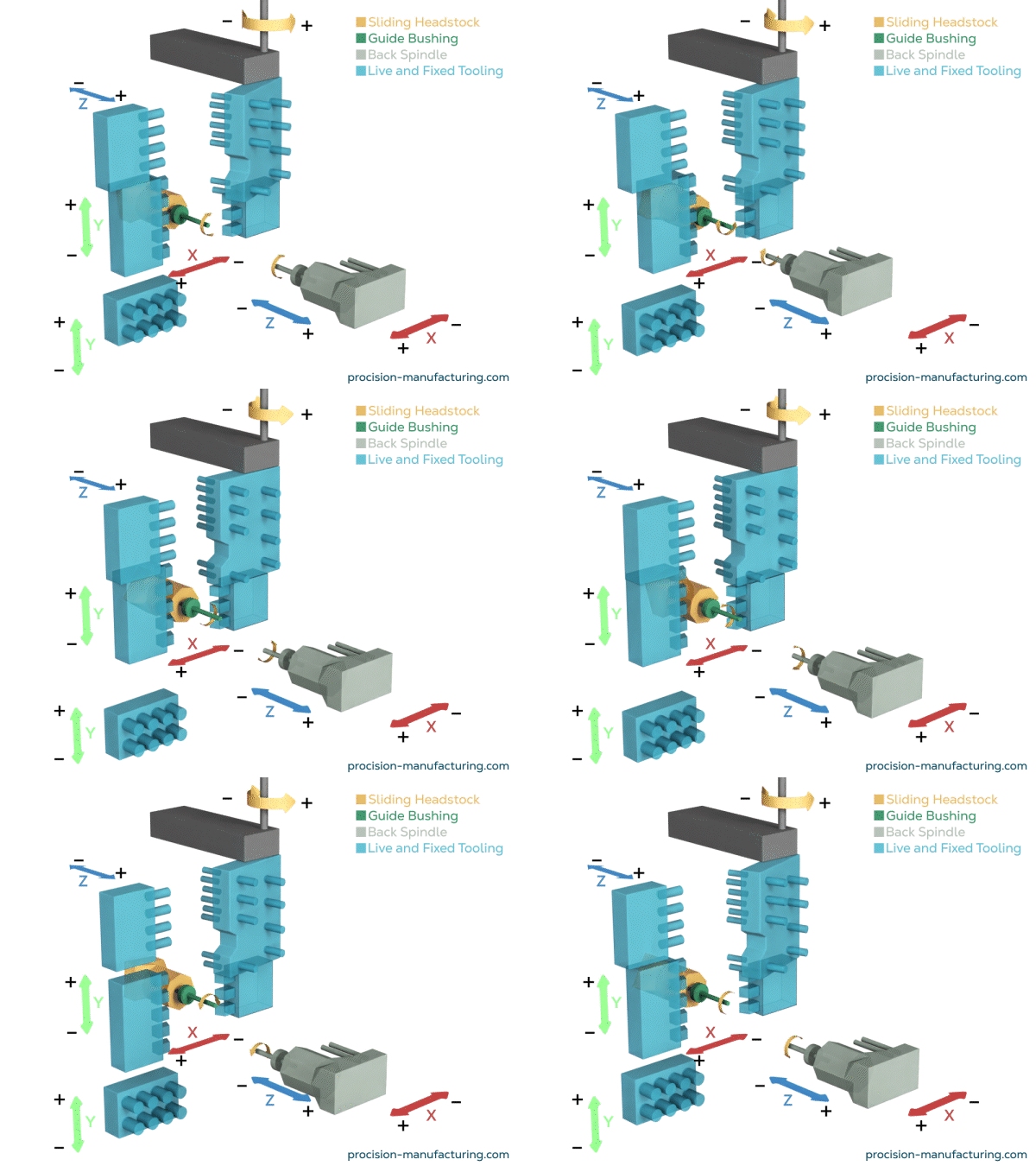
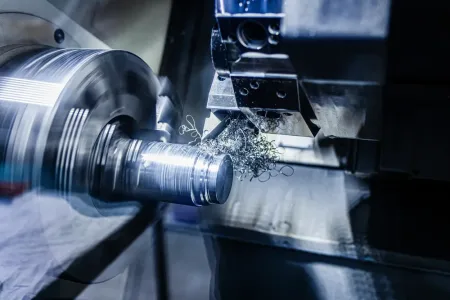
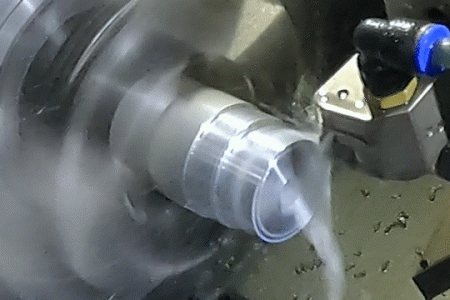
At first, a Swiss lathe looks like a normal CNC turning lathe, but if you look closely you’ll see a few very important differences.
Key Components of Swiss-Type Lathes
Here are some of the components of a Swiss-type lathe that helps it be so accurate and precise.
- Main Spindle: The main spindle is responsible for the primary turning. It has to be very stable and free from vibration in order to achieve the tight tolerances and fine surface finishes even on very small cylindrical parts.
- Sub Spindle: The sub spindle, sometimes called the secondary spindle, lets the machinist perform extra operations on the part, such as cross drilling, tapping, and finishing on the back side.
This capability reduces the need for secondary operations and ensures that even the most intricate parts can be completed in one setup.
- Guide Bushing: A defining feature of Swiss lathes, the guide bushing supports the workpiece close to the cutting tool, minimizing deflection and vibration. This support is essential for maintaining tighter tolerances and producing long, slender components with consistent quality.
By understanding and optimizing these key components, manufacturers count on Swiss lathes to produce high-quality, intricate parts with unmatched consistency and efficiency.
Built for Complexity: Advanced Swiss Lathe Capabilities
Multi-Axis CNC Control
Modern Swiss lathes operate with six or more axes of motion. This allows for:
- Complex contouring and cross-drilling
- Off-center milling, threading, and slotting
- Reduced setups for multi-feature parts
Live Tooling
Tool holders are often “live,” meaning they rotate under CNC control independent of the main and back spindles. This opens the door to advanced secondary operations, such as grooving, milling, and drilling, without dismounting the part. Remember that whenever a part is removed and remounted in a new set-up, it always introduces the possibility of positioning error and looser tolerances. That’s why manufacturers always want to limit remounting as much as possible.
Automatic Bar Feeders
Swiss lathes are compatible with auto-loading bar feeders, which provide:
- Continuous material supply
- Unattended “lights-out” or automated machining
- Higher throughput with minimal human intervention
These features allow Swiss lathes to keep up with the fast pace of modern manufacturing environments.
Book A Discovery Call
Not ready for a quote? No worries, Book a quick call with the sales rep in your area.
Our Team

Sales Director Mathieu Windsor
Book A Discovery Call
Not ready for a quote? No worries, Book a quick call with the sales rep in your area.
Our Team
Sales Director
Mathieu Windsor

Setup and Operation of Swiss Lathes
Setting up a Swiss lathe starts with choosing the right cutting tools to suit the part’s shape and the raw material. Then the operator adjusts the guide bushing to ensure the best support for the bar stock. The raw material needs to be aligned and clamped carefully to make sure it’s perfectly in alignment with the axis of rotation.
Once the setup is complete, the sliding headstock pulls the bar stock through the guide bushing that surrounds and supports the workpiece. This keeps it secure while it’s being machined.
Live tools can then approach the workpiece from many angles, including the back side, to perform all necessary machining functions.
In order to maintain the tightest tolerances on every part, the operato constantly monitors tool wear, speeds and feeds, and makes adjustments according to frequent in-process quality inspections.
By mastering the setup and operation process, machinists can unlock the full potential of this advanced CNC machine for high-precision, complex part production.
Why Use a Swiss Lathe? Benefits for Custom Parts Manufacturing
When you need accuracy, speed, and repeatability, especially for small and complex cylindrical parts, Swiss turning is hard to beat.
Precision at the Micron Level
- Tolerances as tight as ±0.0001”
- Excellent performance on diameters < 1mm
- Perfect for critical-fit parts where alignment, clearance, and sealing matter
- Guide bushing support enables deeper cuts in a single pass
Shorter Cycle Times = Lower Cost per Part
- Simultaneous operations
- Fewer setups
- Reduced setup time lowers cost per part and increases productivity
- No secondary finishing for many parts
Less Material Waste
- Minimal overhang past the guide bushing
- Optimized chip load and material usage
- Use of carefully ground stock material enables tighter tolerances and reduces waste
- Ideal for expensive materials like titanium, Inconel, or PEEK
Excellence without compromise: You don’t have to choose between speed, precision, and quality because Swiss-type turning delivers all three.
Quality Control in CNC Machining
Quality control is paramount for maintaining repeatable performance.
Throughout the production run, parts are inspected for dimensional accuracy, surface finish, and any signs of defects or irregularities. That’s why machinists need to not only operate the lathe correctly but must also be experts in the use of quality inspection tools and methodologies.
By prioritizing control at every stage, from setup to final inspection, manufacturers ensure they consistently deliver only the tightest tolerance parts. This commitment to quality is essential in applications where even the smallest deviation can have significant negative consequences.
Swiss-Type Lathe Applications: Where Small Means Critical
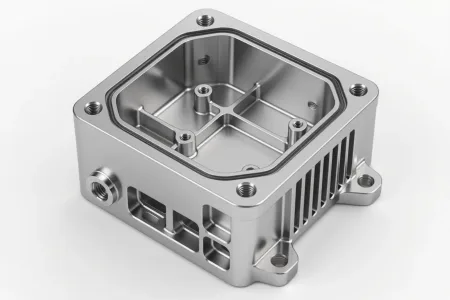
Swiss-type turning is ideal for micro-scale components with demanding functional requirements. CNC Swiss machines excel at producing extremely small parts for critical applications across industries. Common examples include:
- Medical microfluidic fittings and drug delivery components
- Electronics: wearable casings, micro-gear shafts
- Robotics and automation sensors, actuators, and control arms
- Drones: prop shaft bushings, housing features, and signal contacts
- Flow control devices in gas, liquid, and hydraulic systems
Collaborate to Solve: Our dedicated team of engineers partners with you to balance cost, function, and manufacturability from day one, ensuring quality and reliability in every CNC machining project.
Precision Swiss CNC Turning Services
Procision Manufacturing combines CNC turning expertise with cutting-edge Swiss lathes to support your product development goals, whether you’re building the next generation of wearable medical tech or developing aerospace components where failure isn’t an option.
Our machinists operate advanced Swiss turning centers, ensuring exceptional precision and efficiency in every project.
- Precision tolerances down to ±0.0001”
- Prototypes, pre-production, and scaled production
- Full support for metal and high-performance plastic materials
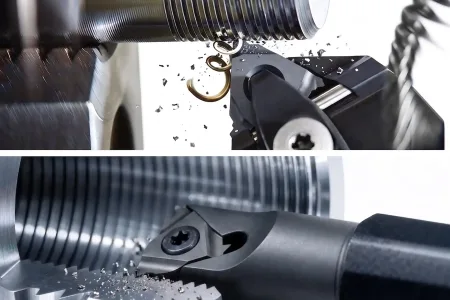
- Specialized operations including single point threading for high-accuracy components
Future Developments in Swiss Turning Center Technology
The future of Swiss-type lathes is being shaped by rapid advancements in CNC technology, machine design, and materials science. One exciting development is the introduction of new materials and coatings for tooling and guide bushings, such as advanced ceramics and nanomaterials. These promise to enhance durability and performance during high-precision machining.
CNC systems are also becoming more sophisticated, with smarter controls that can optimize machining processes, reduce cycle times, and improve overall efficiency. Automation and robotics can be integrated into Swiss-type lathe manufacturing for more consistency and faster throughput.
Let’s Talk About Your Project
Upload your CAD files now for a free, no-obligation quote, or schedule a discovery call with our team to explore how Swiss CNC turning can benefit your next product.