
Choosing the Right Stainless Steel for CNC Milling
What’s the CNC machining materials Difference Between Mild and Stainless Steel?
Is Stainless Steel Stronger Than Mild Steel?
What is a Machinability Index?
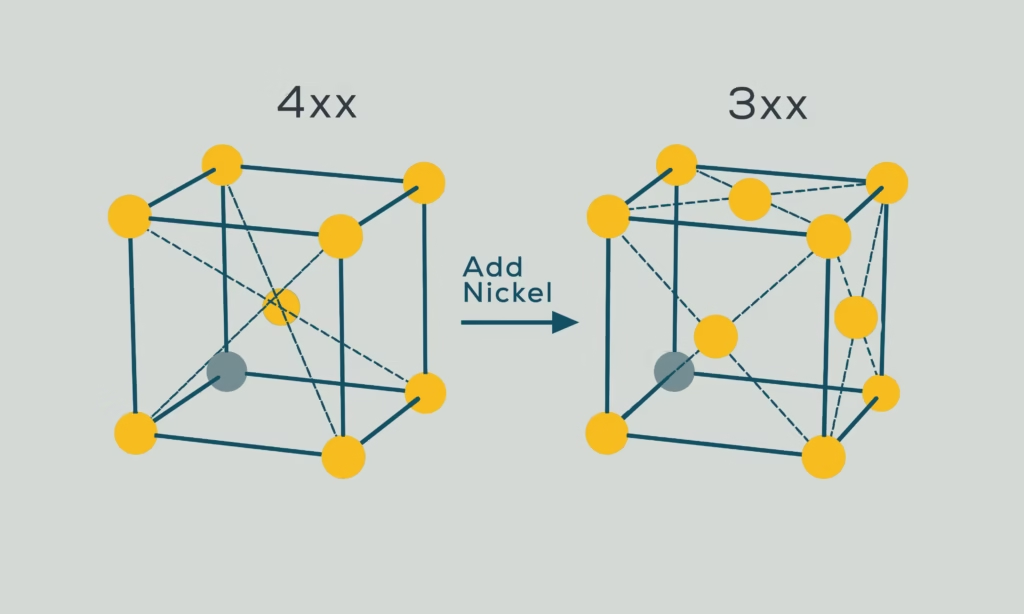
What Are The Two Main Types of Stainless Steels?
The importance of material testing
A Closer Look at Series 300 Stainless Steel
SS 303
Properties of SS 303
- Density (g/cm3): 7.85
- Hardness (Brinell): 170~190
- Tensile Strength (MPa): 620
- Weldability: Poor
- Machinability (%): 70
When to use SS 303
- Machinability is a priority, especially for large production runs
- High aesthetic finish is desirable without extensive post-processing.
- Welding is not required in the final assembly.
- Moderate corrosion resistance is acceptable in dry or low-aggression environments.
SS 304
Properties of SS 304
- Density (g/cm3): 7.93
- Hardness (Brinell): 195~215
- Tensile Strength (MPa): 505
- Weldability: Excellent
- Machinability (%): 45
When to use SS 304
- Corrosion resistance is essential, especially in mildly acidic or wet environments
- Cleanability and hygiene are important (e.g., food or medical)
- Welding or forming is part of the production process
- Cosmetic appearance matters
SS 316
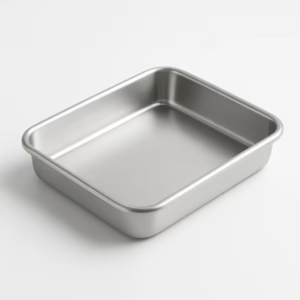
Properties of SS 316
- Density (g/cm3): 7.99
- Hardness (Brinell): 125~155
- Tensile Strength (MPa): 515
- Weldability: Excellent
- Machinability (%): 35
When to use SS 316
- Chloride or chemical exposure is present, including saltwater, bleach, or acidic compounds.
- Superior corrosion resistance is required over SS 304 or SS 303.
- Welding and hygiene are important (e.g., pharma, food).
- Long-term durability is worth the added material cost.
- You’re designing for outdoor, marine, or chemical-rich environments.
SS 316L
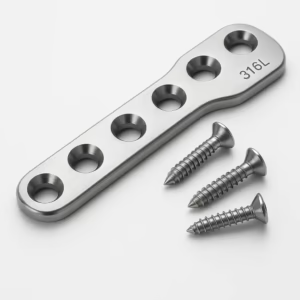
An important variation of 316 is SS 316L, meaning low carbon. It has most of the same characteristics as SS 316 but is even more corrosion resistant while being slightly less strong.
It’s mainly used for applications that require heavy weldments, because the surface resists intergranular corrosion. Used in biotech, chemical and food processing equipment, surgical trays, and orthopedic instruments.
Properties of SS 316L
- Density (g/cm3): 7.99
- Hardness (Brinell): 125~155
- Tensile Strength (MPa): 485
- Weldability: Excellent
- Machinability (%): 35
When to use SS 316L
Use stainless steel 316L when:
- Welding is required, and you want to avoid carbide precipitation (which weakens corrosion resistance).
- You’re building pressure vessels, tanks, or pipe systems that will be cleaned or sterilized regularly.
- The environment involves chlorides, acids, or harsh chemicals, especially with cyclic temperature changes.
- You need compliance with hygienic or biomedical standards (e.g., ASTM F138 for medical instruments).
A Closer Look at Series 400 Stainless Steel
The 400 series stainless steels are typically more expensive than the 300 series, because they’ve been more carefully engineered to offer higher levels of performance for more demanding applications and environments.
Let’s take a closer look at the most common ones used in tight tolerance CNC milling.
SS 416
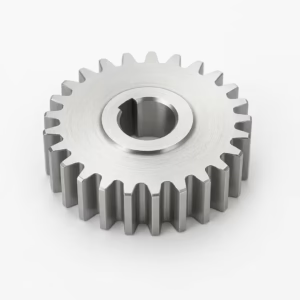
The first on our list of martensitic stainless steels is SS 416. It was specially formulated to be ‘free machining’, with an index rating of 85~90%. SS 416 is known as the most machinable stainless steel.
This is due to a high content of sulfur which, as we’ve seen with the other stainless steels, improves chip forming but interferes with welding and corrosion resistance.
Like other martensitic steels it can be heat treated to improve hardness, and it maintains excellent dimensional stability during CNC milling. Often found in automotive steering systems, gears, hardware, and non-critical aerospace components.
Properties of SS 416
- Density (g/cm3): 7.75
- Hardness (Brinell): 170~190
- Tensile Strength (MPa): 540
- Weldability: Poor
- Machinability (%): 85
When to use SS 416
Use SS 416 when:
- Machinability is the #1 priority – especially in high-volume production.
- You need a moderately corrosion-resistant alternative to carbon steel, with better surface finish and strength.
- The part will be heat treated for hardness but not welded or heavily formed.
- You are making CNC high tolerance mechanical components where cost and speed matter.
SS 420
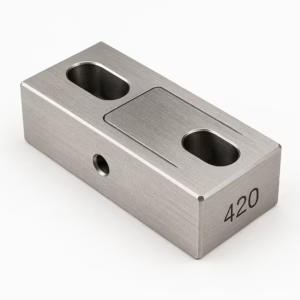
Properties of SS 420:
- Density (g/cm3): 7.75
- Hardness (Brinell): 201~255
- Tensile Strength (MPa): 700
- Weldability: Poor
- Machinability (%): 55
When to use 420
Choose SS 420 when:
- You need a hardenable stainless steel with high strength and wear resistance.
- Edge retention or surface hardness is more critical than corrosion resistance.
- The part can be CNC machined in annealed condition and then hardened after.
- You’re producing blades, tools, or dies that must be polished and sharpened.
SS 440C
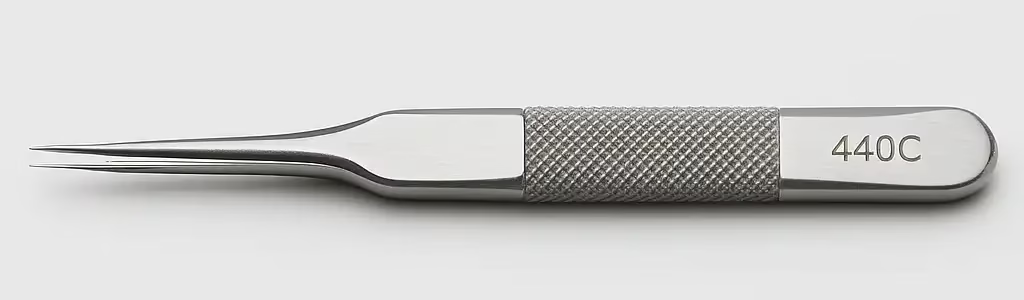
Stainless steel 440C is the hardest high-carbon variant in the 400 series. It’s designed to be extremely wear resistant and holds a fine edge. It has a medium machinability index of about 40%, with relatively poor anti-corrosion performance and weldability.
The high carbon content means it can be heat treated to greatly increase its strength. It excels at making fine surgical cutting tools and razors, as well as mechanical components like bearings, pump shafts, and valves.
Properties of SS 440C
- Density (g/cm3): 7.75
- Hardness (Brinell): 190 ~ 240
- Tensile Strength (MPa): 760
- Weldability: Poor
- Machinability (%): 40
When to use 440C
Use SS 440C when:
- Maximum hardness and wear resistance are required.
- You’re producing high tolerance precision parts under mechanical stress or abrasion.
- The part can be CNC machined in a soft (annealed) state and then hardened.
- Moderate corrosion resistance is acceptable.
- Welds or formed shapes are not part of the design.
Specialty Stainless Steels
There are other alloys that, although technically “stainless” because of a chromium-oxide layer, don’t fall within the same series classification. They contain proprietary blends of trace elements designed to enhance specific characteristics.
SS-SAF2205
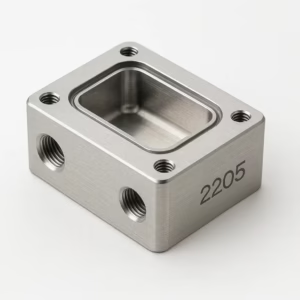
Stainless steel SAF2205 is known as a duplex steel. This means it has a roughly 50/50 microstructure of austenite and ferrite. This combination is great for strength and corrosion resistance, especially in chloride-rich environments.
With a machinability index of 35% it’s still difficult to CNC machine, but it has excellent weldability and medium formability. It excels in corrosion resistance, so it’s often found in chemical processing, oil and gas, refining and mining, marine, and other challenging industrial environments.
Properties of SAF 2205
- Density (g/cm3): 8
- Hardness (Brinell): 293
- Tensile Strength (MPa): 620~880
- Weldability: Good
- Machinability (%): 35
When to use SAF 2205
Choose SAF 2205 / Duplex 2205 when:
- You need high resistance to chloride-induced pitting, crevice corrosion, or stress corrosion cracking
- The application demands high strength to reduce wall thickness or structural weight
- You need better performance than 316 in aggressive environments (saltwater, acids, industrial)
- Welded joints will be subjected to stress + corrosion, where 304/316 may crack
- Budget doesn’t permit super-duplex or exotic alloys like Hastelloy or 904L
17-4 PH
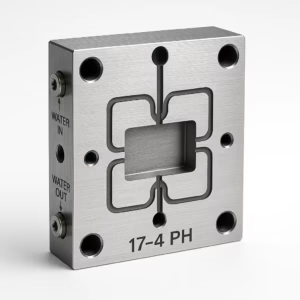
Finally, we have 17-4 PH, or precipitation hardenable stainless 17-4. It combines high strength with corrosion resistance, making it useful in many industrial components. It has medium machinability, good weldability, but rather poor formability.
It’s often found in levers and shafts, structural and frame components, surgical tools, and dies for plastic injection molding.
Properties of 17-4 PH
- Density (g/cm3): 7.75
- Hardness (Brinell): 311
- Tensile Strength (MPa): 1100
- Weldability: Fair
Machinability (%): 45
When to use 17-4 PH
Use 17-4 PH when:
- You need high mechanical strength + corrosion resistance in the same package.
- The part must be precision-machined and distortion-free after hardening.
- Welded structures require strength and stability without post-weld heat treatment.
- You want to replace alloy steels where corrosion resistance is needed.
- Application involves high static or cyclic loads.
Best Practices for CNC Machining Stainless Steel
Select the Right Tooling
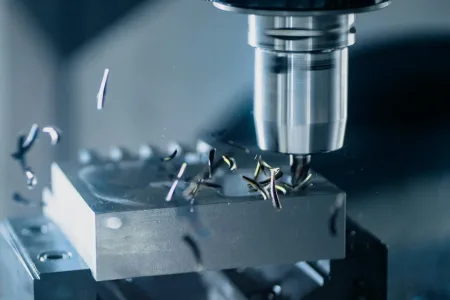
Use high-performance carbide end mills and drills specifically designed for machining stainless steel. Carbide tools offer superior wear resistance and maintain sharp cutting edges, which is essential for clean, precise cuts in tough stainless alloys.
Optimize Cutting Parameters
Stainless steel requires slower cutting speeds and moderate feed rates to prevent excessive heat buildup and tool wear. Always consult manufacturer recommendations for optimal speeds and feeds, and adjust based on the specific stainless steel grade and part geometry.
Apply Ample Coolant
Effective cooling is critical when CNC milling stainless steel. Use flood coolant or high-pressure coolant systems to dissipate heat, reduce thermal expansion, and flush away chips. This helps prevent work hardening and extends tool life.
Use Rigid Workholding
Secure the workpiece firmly to minimize vibration and movement during machining. Rigid fixturing ensures consistent dimensional accuracy and surface finish, especially when producing complex stainless steel parts.
Minimize Tool Engagement
When possible, use climb milling and light, consistent cuts to reduce tool engagement and heat generation. Avoid deep cuts or aggressive plunging, which can accelerate tool wear and cause work hardening.
Regular Tool Inspection
Frequently check tools for wear or chipping. Dull or damaged tools can lead to poor surface quality, increased heat, and even part rejection. Replace or regrind tools as needed to maintain optimal machining performance.
Chip Control
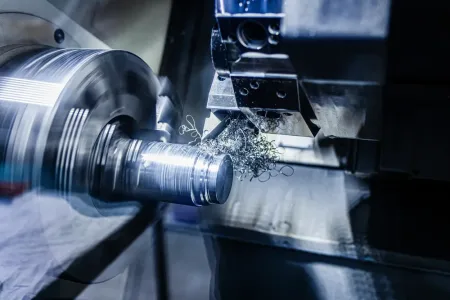
Stainless steel produces tough, stringy chips that can interfere with the machining process. Use chip breakers, peck drilling cycles, or high-pressure coolant to manage chip evacuation and prevent recutting.
Monitor Part Quality
Continuously inspect machined parts for dimensional accuracy, surface finish, and signs of thermal damage. Early detection of issues allows for quick adjustments to machining parameters, ensuring consistent quality throughout the production run.
By following these best practices, professional manufacturers overcome the challenges of machining stainless steel and achieve reliable, high tolerance results.
Whether you’re producing precision components for aerospace, medical, or industrial applications, attention to detail at every stage of the CNC milling process will pay off in part performance and durability.
Get Stainless Right the First Time
Selecting the right stainless steel alloy for CNC manufacturing isn’t just a materials decision, it’s a strategic one. The wrong choice can result in higher tooling costs, production delays, poor corrosion performance, or field failure. That’s why reliable CNC machining companies always test first before making a single cut.
By understanding how each grade behaves, you can confidently balance performance, cost, and manufacturability while building better parts without the worry.
Need Expert Help with Stainless Steel for CNC milling?
Upload your CAD files for a free, no-obligation quotation for the first button.
Or book a discovery call to discuss your next CNC milling project.