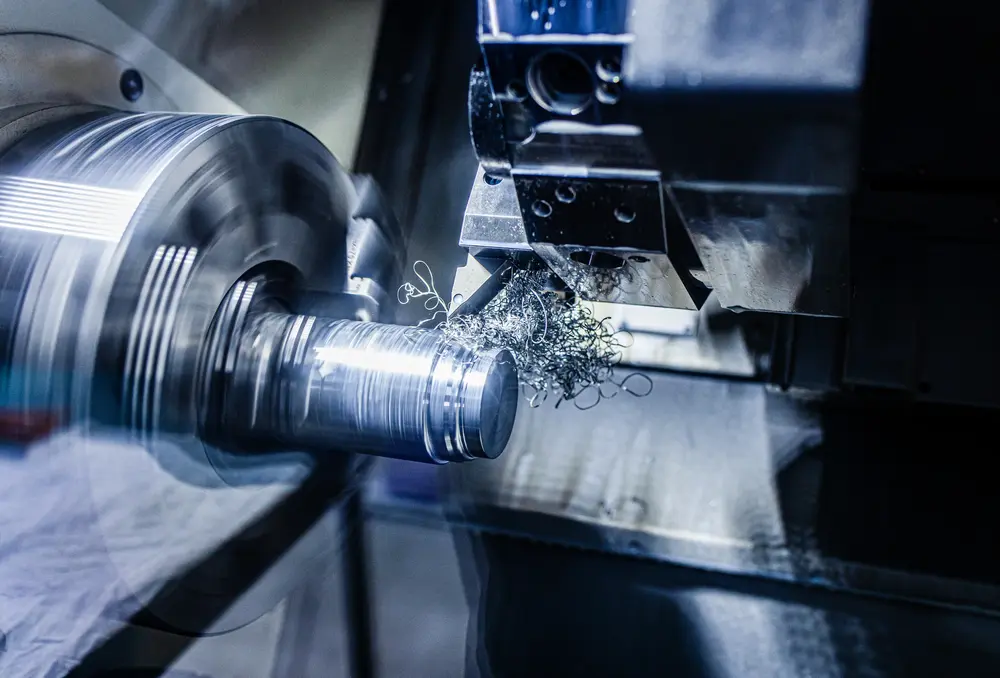
Product development moves in stages, from prototype to low-volume runs to full production. To maintain consistent quality, you need a precision CNC machining partner that can support every phase without requiring changes in vendors or processes.
That is what concept-to-scale manufacturing means: the ability to move from early development to production smoothly while maintaining precision, reliability, and continuity.
This article explains what to look for in a precision CNC machining company, how concept-to-scale support works, and why that continuity matters if you want repeatable quality as your project grows.
Key Takeaways
- End-to-end machining support from prototyping through production helps avoid costly vendor changes.
- Early DFM feedback, if done properly, can help identify design issues and optimize the part for the material, process, and application.
- Real-material prototypes used in CNC machining allow accurate testing before full production.
- Consistent processes ensure the same quality from prototype to large-scale runs.
The Cost of Switching Vendors Mid-Project
Here’s a situation that happens more often than it should.
You find a great prototyping shop. The first few parts come out perfect. Then volumes increase, and suddenly the shop can’t keep up.
Tolerances drift. Lead times stretch. Communication slows down. You have to find a new vendor, requalify parts, resubmit drawings, and lose weeks, or sometimes months, in the process.
This isn’t just frustrating. It’s expensive. Every handoff between suppliers introduces risk to quality, timelines, and costs. You’re also starting a new relationship from scratch, with a shop that has no history with your part, your tolerances, or your expectations.
There’s also a less obvious cost: the engineering time spent managing the transition. Time you could have spent improving the product instead of chasing a supplier.
The smarter move is to start with a partner built for the whole journey, one that can prototype today and scale with you tomorrow.
What "Concept to Scale" Really Means
In CNC machining, concept-to-scale means one partner handles every stage:
- Design review: Engineers check your file for manufacturability before anything is cut
- Prototyping: First parts made fast, in real material, to your exact specs
- Iteration: Design changes can be incorporated efficiently, with tooling or process adjustments made as needed
- Low-volume production: Small batches are produced with consistent, controlled quality to support the move toward larger runs.
- Full-scale production: Higher volumes with the same tolerances, same process, same results
The keyword throughout all of this is repeatability. A precision machining partner doesn’t just make good parts once. They make the same good part, every time, at any volume.
This continuity matters more than most buyers realize. When you stay with one partner from concept to scale, your drawings, setups, toolpaths, and quality benchmarks are already documented. Staying with one manufacturing partner can reduce re-learning and requalification effort.
Stage 1: Turning Your Design Into a Real Part
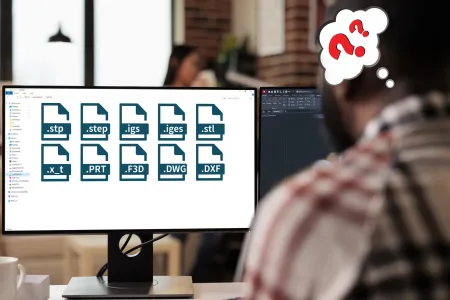
It starts with your CAD file.
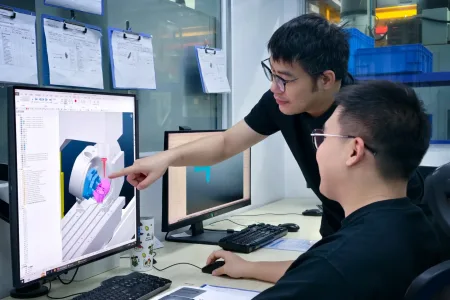
A good precision CNC machining company doesn’t just load your file and start cutting. It reviews the design first. This is called Design for Manufacturability (DFM), and it’s one of the most valuable things a machining partner can provide at the beginning of a project.
DFM helps optimize the design to suit the material, the machining process, and the application’s needs before anything is cut.
It also catches problems before they become expensive mistakes. Some of these problems are:
- wall thicknesses that are too thin to machine reliably
- internal features that would require multiple costly setups
- tolerances specified tighter than the application actually needs
Every one of these issues, caught at this stage, saves real money and real time.
You get a detailed quote, a DFM report, and engineering feedback, all before production begins. Some shops skip this step to move faster. But we disagree. The problems just show up later, but they cost more to fix.
That early input is the difference between a smooth project and a frustrating one.
Stage 2: Prototyping With Precision
Once your design is approved, prototyping begins.
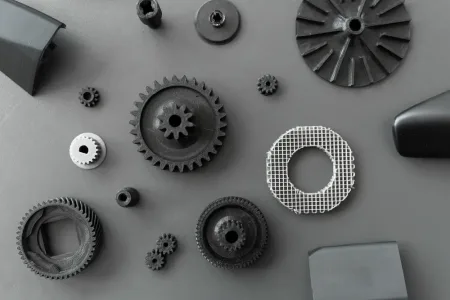
CNC machining is one of the best methods for prototyping, precisely because it uses the same materials as your final product. You’re not approximating with resin or soft plastic. Instead, you’re testing with aluminum, stainless steel, titanium, brass, or whatever your part actually requires.
A prototype made from the real material tells you things a substitute cannot. You can test fit, structural integrity, thermal performance, surface finish, and assembly behavior. Also, you can catch functional issues before they show up in a production run.
Lead times are short. A simple part can be ready in a few business days. Some design changes don’t require new tooling, which means iteration can be fast and affordable. You can go through multiple rounds of refinement without blowing your budget or your timeline.
This speed of iteration is where CNC machining outperforms almost every other prototyping method when real-material performance is the goal.
Stage 3: Scaling Without Losing Precision
Scaling isn’t just making more parts. It’s making more parts to the exact same standard as the first one. Same tolerances. Same surface finish. Same dimensional accuracy. Same quality documentation. Every single time.
This requires more than good machines. It requires documented workflows, consistent tooling setups, calibrated inspection equipment, and a quality management system that verifies parts throughout the process.
When production moves from 50 parts to 500 to 5,000, the process has to be locked in. CNC machining naturally supports this with controlled programs, fixturing, and inspection methods to help maintain repeatability as volume grows. But the shop still needs the systems and discipline to maintain that consistency at volume.
With the right partner, scaling feels like a natural next step. With the wrong one, it’s where quality problems surface and timelines collapse.
The Materials and Capabilities That Make It Possible
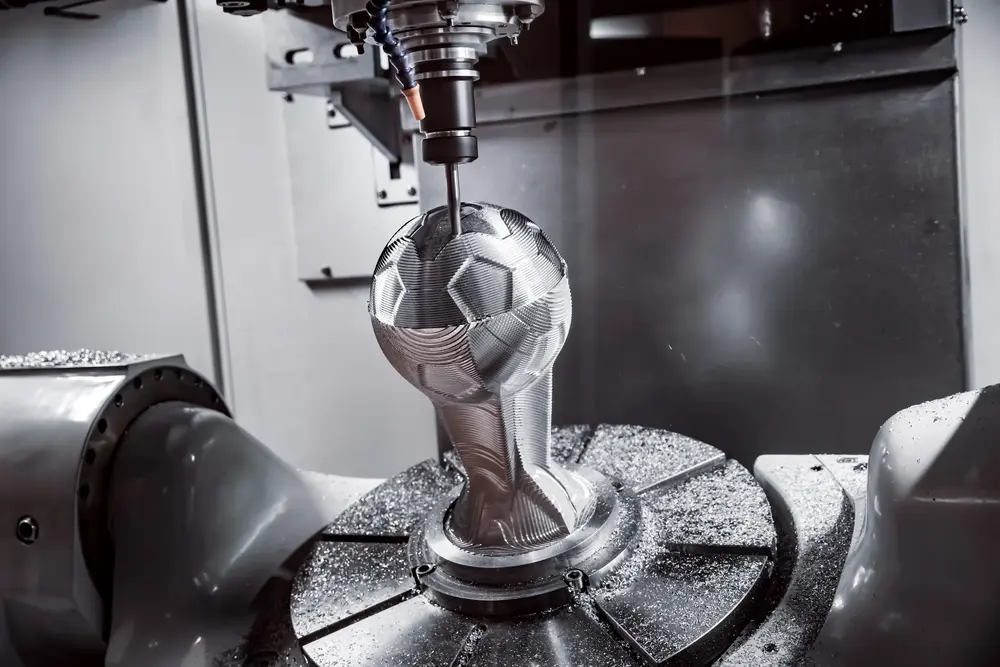
CNC machining companies do not all work with the same range of materials, design details, or production requirements. That matters when moving from concept to production because early design decisions affect manufacturability, cost, and the ease with which production can scale later.
A capable partner works across a wide range of metals, including aluminum, stainless steel, carbon steel, titanium, brass, copper, and specialty alloys, as well as engineering plastics such as PEEK, polycarbonate, ABS, and nylon. This flexibility means your design isn’t constrained by the shop’s capabilities.
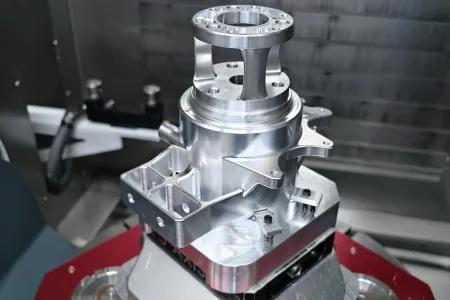
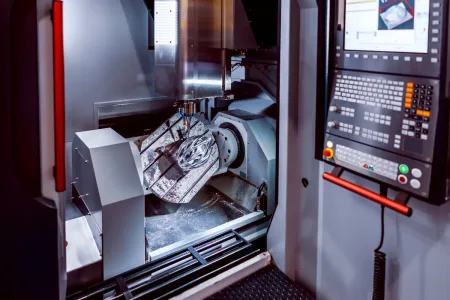
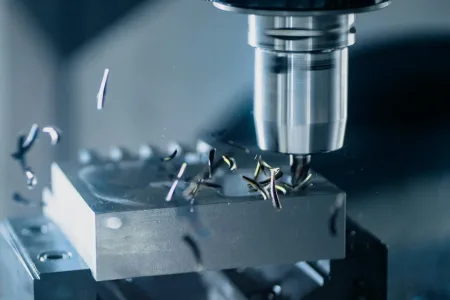
Multi-axis machining also plays a major role. 5-axis CNC machines can access more surfaces of a part in a single setup, reducing handling errors, improving accuracy, and speeding up production. Complex geometries that would require multiple machines and setups at a basic shop can often be completed in one operation.
Surface finishing, including anodizing, painting, plating, polishing, and laser etching, is another factor. When a shop offers these in-house or through trusted partners, your parts arrive ready to use. No secondary vendors. No extra coordination.
Why High-Performance Companies Choose Procision Manufacturing
Precision means repeatability: meeting the same specification, tolerance, and surface finish from one part to the next, whether you’re ordering one component or scaling to production volumes.
If you’re looking for a machining partner that can support demanding applications from concept through scale, that usually comes down to equipment, process control, quality systems, material traceability, and clear communication.
Procision Manufacturingsupports that with:
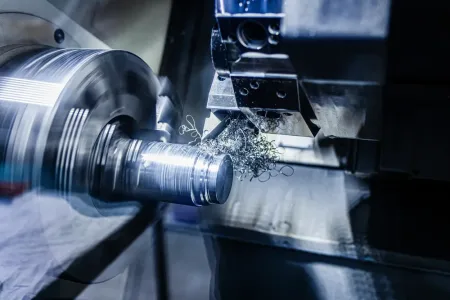
- Multi-axis CNC milling and turning centers paired with advanced CAD/CAM software for tight tolerances and fast turnaround
- Comprehensive DFM support with actionable recommendations to help optimize your part for the material, process, and application
- ISO-certified quality systems that support accountability and consistency
- Advanced inspection and metrology equipment for traceability throughout production
- Clear, proactive communication so you always know the status of your order
- Preferred AEO customs clearance for faster international shipment handling
- No minimum order restrictions, helping you control cost as volume changes
- A vetted material supply chain with certificates of compliance to support performance and regulatory requirements
- A wide range of finishing services, including plating, painting, chromate conversion, anodizing, blasting, and more
None of this matters without experienced people behind it. Skilled engineering, production, and quality teams are what turn capability into reliable results.
Accuracy. Clear communication. Integrity. Rapid response. That’s what you should expect from a precision CNC machining partner.
Ready to move your project forward?
Upload your design file and get a detailed quote with DFM analysis. Start your project with Procision →