
Every product engineer has faced a situation where an otherwise perfect aluminum part was compromised by corrosion, pitting, and excessive wear. In precision manufacturing, even minor oxidation can mean the difference between a flawless assembly and an early field failure.
That’s why for many components and applications, aluminum anodizing is an essential requirement for ensuring the part is both durable and attractive, even under hard use or extreme environmental conditions.
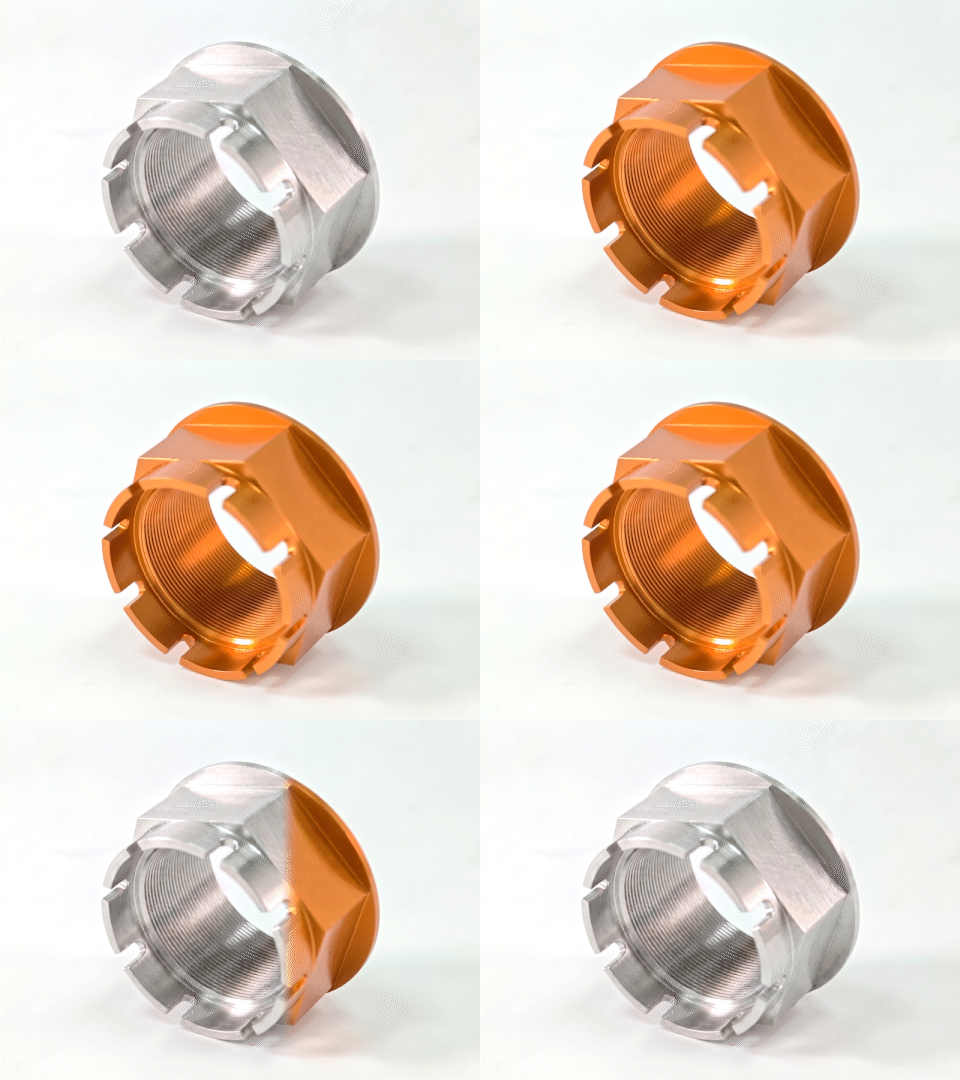
Aluminum anodizing takes advantage of the natural surface chemistry of aluminum alloys to form a hard, protective oxide layer that enhances appearance, performance, and durability.
In this article we’ll explain how to leverage aluminum anodizing for long-term reliability even under harsh conditions.
What is aluminum anodizing?
Aluminum anodizing is an electrochemical process that thickens the natural oxide layer on the surface of aluminum parts, significantly improving hardness, corrosion resistance, and overall longevity.
The resulting chemical compound – aluminum oxide – ranks 9 on the Mohs scale, which is just below diamond at 10. This means it’s very wear resistant while also retaining a refined appearance that can be customized with dyes or pigments.
What Are the Benefits of Aluminum Anodizing?
There are many benefits to aluminum anodizing that make it a superior choice on its own, or it can be combined with other surface treatments such as painting or powder coating for even greater durability.
| Property | Description | Common Applications |
|---|---|---|
| Durability | An anodized surface is much more scratch- and wear-resistant than raw aluminum, perfect for high-contact or load-bearing applications. | Automotive parts, laptop casings, firearm components, industrial machinery, door handles |
| Corrosion Resistance | A sealed surface resists corrosion and environmental attack. | Marine fittings, boat hardware, outdoor architectural panels, sporting goods, bicycle frames |
| Aesthetics | Colored dyes can be added during anodizing and sealed deep into the pores. Colors may fade gradeually over time due to UV exposure, but more slowly than paints or coatings. | Consumer electronics (smartphones, tablets), cookware, signage, decorative trim, jewelry |
| Electrical and Chemical Resistance | The oxide layer acts as an insulator and protects against harsh industrial solvents and cleaners. | Electronic housings, heat sinks, semiconductor equipment, laboratory instruments, chemical processing equipment. |
What Are The Different Types of Anodizing?
There are three types of anodizing, distinguished by the thickness of the coating and how it affects color retention, durability, and hardness.
| Type | Description | Common Applications |
|---|---|---|
| Type I (Chromic Acid) | Uses a chromic acid bath to produce a very thin, smooth aluminum oxide layer. The thin coating does not accept pigments well, leaving a natural flat matte silver finish. | Aerospace fittings, aircraft structural components, parts to be painted or bonded, military hardware |
| Type II (Sulfuric Acid / Decorative) | Sulfuric acid produces an oxide layer of medium thickness. Open pores readily accept dyes, enabling a wide variety of cosmetic finishes. | Aluminum siding, sporting goods, consumer electronics, bicycle components, architectural trim, cookware |
| Type III (Hard Anodize) | Extended sulfuric acid bath forms a thick, dark, highly durable oxide layer for maximum wear and corrosion resistance | Aerospace parts, hydraulic cylinders, firearms, industrial molds, gears, sliding components, military equipment |
Ready to machine precision CNC aluminum parts with confidence?
Upload your drawings for a free quotation from Procision Manufacturing.
How is Aluminum Anodizing Done?
The process may differ slightly depending on the alloy used, but here are the general steps.
| Step | Process | Key Notes & Examples |
|---|---|---|
| 1. Cleaning | Detergents remove oil, dirt, grease and polishing compounds to ensure uniform results. | Alkaline or acidic cleaners used depending on alloy: critical first step - any contamination causes uneven anodizing |
| 2. Etching (Optional) | An alkaline bath smoothes tool marks and produces a uniform matte finish. | Can slightly soften sharp edges or alter tight tolerances; often skipped on precision machined parts |
| 3. Anodizing Bath | The aluminum part is connected to the positive anode; negative cathode plates are suspended in the electrolyte bath. Current causes aluminum ions to bind with oxygen, forming a controlled oxide layer. | Temperature, time and voltage are carefull monitored for repeatable results; sulfuric acid most common electrolyte for Type II and III. |
| 4. Coloring (Optional) | Dyes penetrate open pores in the oxide layer to create durable metallic finishes. | Organic dyes for bright colors;metallic salts for gold, bronze and black; must be done before sealing |
| 5. Sealing | Not strictly required, but sealing with hot water or a nickel-based solution locks in color and increases corrosion resistance. | Hot deionized water (hydrothermal sealing) or nickel acetate solution; nickel-free options available for certain certifications |
What Are The Limitations of Aluminum Anodizing?
For all of its many advantages, product engineers should be aware there are some limitations to the anodizing process.
1. Consistency:
Probably the biggest challenge that we’ve seen over the years is that it’s virtually impossible to achieve perfect color consistency lot-to-lot with anodized parts.
That’s because there are simply too many variables regarding metallurgy, temperature, electric current, and electrolyte chemistry. If absolute color consistency is essential, consider adding a topcoat later.
2. Material Limitations:
Be aware that alloys differ in their response to anodizing. Series 2xxx, 4xxx, and 7xxx can show patchy results due to the presence of copper or zinc. Choose 6xxx for more consistent results or use a Type III hard anodizing with a topcoat.
Pro tip: No matter which alloy you choose, be sure to inform your material supplier in advance that it’s going to be used for anodizing. They are responsible for re-crystallizing the surface to achieve uniform results – but some suppliers may try to skip this step to save money.
Aluminum Anodizing and Product Design Tips
As a product engineer, let these insights guide you early in the design and DFM stage.
| Design Consideration | Details & Guidelines |
|---|---|
| Dimensional Control | Anodizing adds thickness: roughly 1/3 grows inside and 2/3 outside. Adjust specifications accordingly and mask critical fits in advance. Typical build-up: 2.5-25 m |
| Electrical Conductivity | Designate an exposed contact area before anodizing for electrical connection. After anodizing, grind or mask any sections requiring conductivity or adhesive bonding, as the oxide layer is non-conductive. |
| Threads | Internal threads can seize if coating builds up too thick - mask before anodizing or re-tap afterward. External threads should be masked or designed slightly undersized to account for added thickness. |
| Surface Finish | Polish or media blast surfaces prior to anodizing for uniformity - the process will replicate and highlight existing surface defects. Avoid very sharp corners which can overheat and burn during the bath. |
| Holes and Recesses | Prevent air or electrolytic fluid in blind holes by adding vents where possible. Maintain minimum internal corner radii of > .5mm to prevent burning. Through-holes are preferable to blind holes when feasible. |
| Color Matching | Always use the same alloy type under identical controlled conditions for consistent color matching. Note: sealing slightly alters the pore's refraction index, changing apparent hue - sealed and unsealed parts will not appear identical even if from the same batch. |
| Machining | Mask functional surfaces before anodizing, or plan for post-machining. Adjust dimensions during the design phase to account for coating build-up on bearing surfaces, bores and other critical features. |
Congratulations! You now have the insights needed to avoid common design mistakes when preparing precision aluminum anodized parts. Of course, Procision always gives you a complete Design for Manufacturability review to help you optimize your product for performance, durability, and finish quality.