
Key Takeaways
To keep up with innovations in designs and materials in motorsports, engineers rely on precision manufacturing services to make parts that can outlast the competition. These services often include both rapidprototyping and CNC machining, since they excel at creating and modifying new design concepts quickly.
Today we’re going to look at how precision CNC manufacturing and rapid prototyping services enable motorsports competitors to attain ever-higher levels of performance. We’ll explore what it takes to make components that help drivers push themselves and their machines to their limits – and beyond.
The Role of Prototyping
The role of prototyping is to turn visual CAD renderings into solid parts quickly, cost-effectively, and with sufficient fidelity to allow for part validation.
Why Do Motorsport Components Need Constant Redesign?
There are at least five reasons why components in competitive motorsports are constantly undergoing revision and redesign:
- Rule changes. Every governing body in every competitive motorsport wants to ensure that no single team has a technically dominant advantage. This would hurt fan engagement and racing excitement between teams.
- Redesigns to make cars more efficient and limit their environmental impact.
- Changes brought about by new race technologies, such as hybrid gas/electric motors or recovery brake systems.
- Adaptation to advanced materials such as carbon fiber composites or exotic ceramics.
- Lessons learned. A race season reveals where a car can be improved upon, even with minor refinement.
To meet these challenges, engineers turn to 3D printing and polyurethane vacuum casting services to make rapid prototypes.
3D Printing Services for Motorsport Prototypes
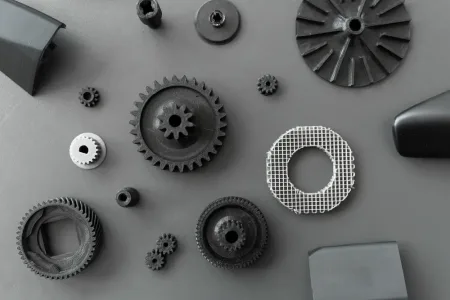
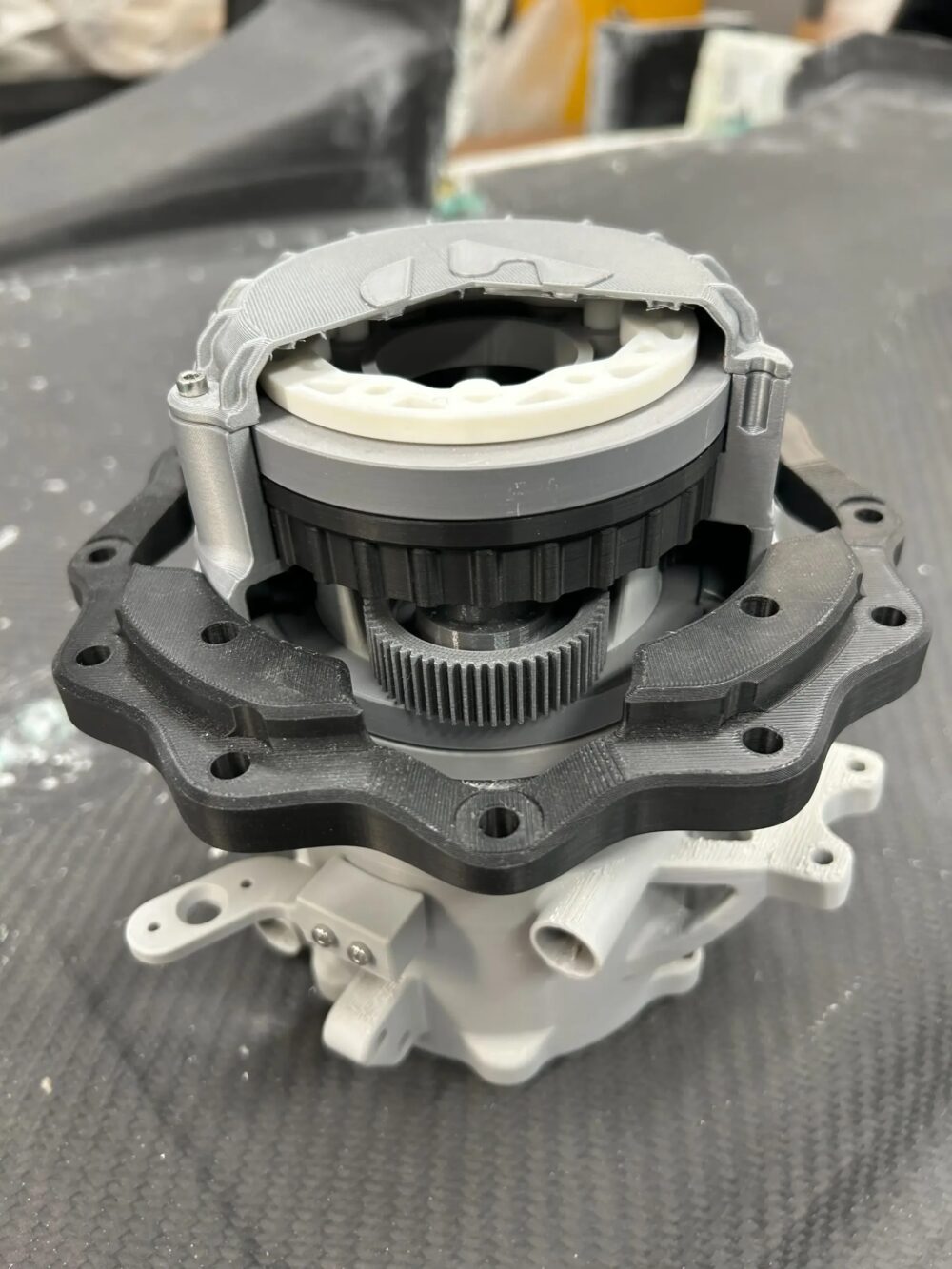
3D printing for motorsport prototypes can potentially use several different printing technologies, but let’s consider Fused Deposition Modeling (FDM).
FDM models have good layer adhesion and they’re strong enough for light engineering testing. If necessary, they can even be post-machined to make close-tolerance features.
The advantages of 3D printing for motorsports include:
- Speed. A 3D model can be programmed and printed in less than an hour, which is ideal for multiple iterations of design concepts.
- Cost. Material usage is low, and in fact many workshops have their own small FDM printers so the copies can be produced in-house.
- Easy modifications. Minor changes to the print file can be done in minutes.
The disadvantages of 3D printing for motorsports include:
- Poor surface finishcompared to CNC machining
- Lower densityand strength compared to plastic injection molding
- Loose tolerances that may require post-machining.
Polyurethane Vacuum Casting Services for Motorsports Prototypes
Polyurethane vacuum casting for motorsport prototypes is ideal for making multiple copies of plastic parts featuring near-production quality, using pourable liquid resin analogues that mimic the performance of true plastic injection molding.
Advantages of polyurethane vacuum casting prototypes for motorsports:
- Excellent surface finishes
- Tight tolerances
- Supports overmolding
- Material versatility
- Good part density and strength
Disadvantages of polyurethane vacuum casting prototypes for motorsports:
- Requires making a separate master pattern and silicone mold
- Limited number of copies
- Longer lead time
- Higher financial investment
- More difficult to modify
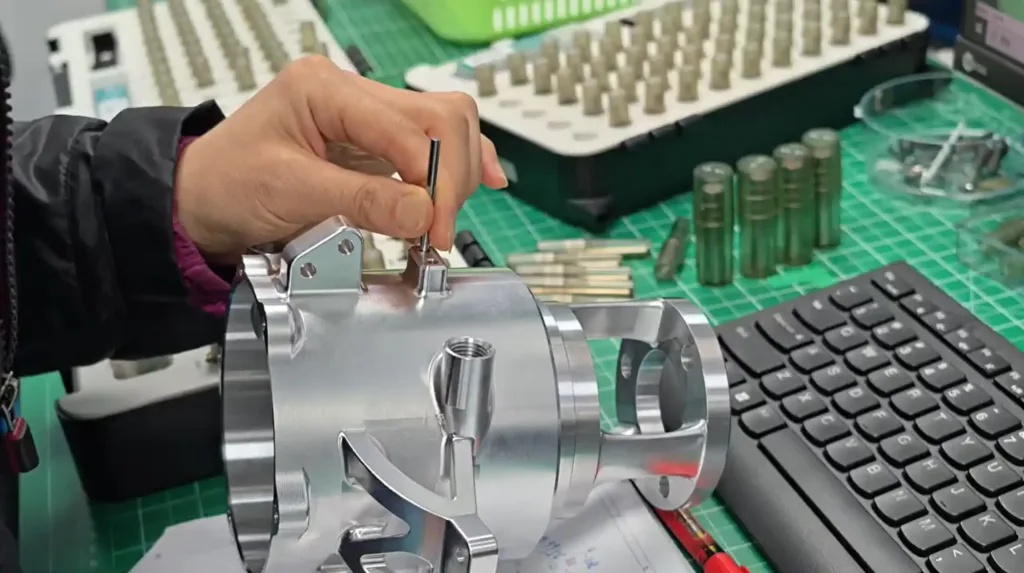
The Importance of Custom Rapid Prototyping Services for Motorsports
No matter the process used, custom rapid prototyping services are invaluable in meeting several critical needs in motorsports.
Speed
Rapid prototyping turns 3D CAD models into finished parts quickly – hours and days compared to weeks. Some fidelity is lost compared to a full production component, but engineers can make quick modifications on the fly without expensive investments.
Order of operation
The order of operation refers to the logical steps it takes to put an assembly together. The more complex the assembly, the higher likelihood that some parts may interfere with one another or be “tricky” to put together.
This is often overlooked but it’s so important, especially if the assembly is a motorsports part that must be quickly disassembled, serviced, swapped out or repaired under race conditions.
Rapid prototypes help you optimize assembly logic to achieve maximum efficiency.
Clearance fit and alignment
Clearance fit is an engineered gap between parts that allows them to slide or move against one another smoothly.
Alignment ensures that multiple features on different components are in the correct orientation. This is especially critical on hole locations, where even minor deviations can cause parts to jam or be impossible to bolt together.
Alignment also helps to check if there is sufficient access for fasteners and the tools needed to tighten them.
Everything must fit together smoothly and precisely for maximum performance and minimal chance for error in race conditions. Rapid prototypes help to confirm these details and produce systems that work.
Ready to start your CNC machining project?
Upload your drawings for a free quotation from Procision Manufacturing.
Precision CNC Machining Services for Motorsports
Precision CNC machining services come into play after the prototyping and design validation stage. Competitive motorsports components require strong materials that combine light weight with complex geometries, and CNC machining is ideal for this.
CNC Turning Centers for Motorsports Parts
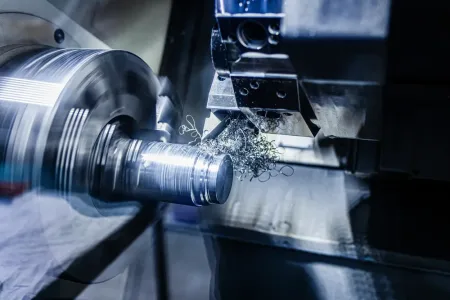
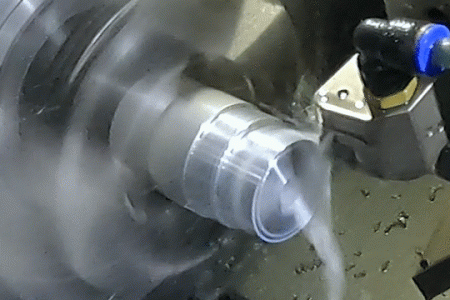
Precision multi-axis CNC turning centers have a large central headstock and chuck that spins a part on its primary axis. Combined with live tooling, turning centers are the go-to solution for axial components used in motorsports.
The advantages of CNC turning services for motorsports
High speed lathes excel at machining cylindrical components featuring very tight tolerances. Because the cutting tool never leaves the workpiece, the surface finishes are exceptionally smooth and fine.
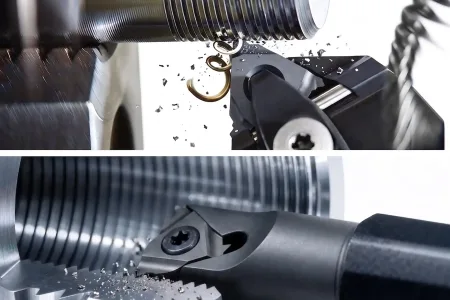
Turning centers are used to bore deep holes, create internal and external threads, slots, shoulders, tapers and other axial features.
Materials used in precision CNC turning for motorsports
CNC turning centers are versatile machines that can work with even the most demanding and exotic materials. When ultimate strength and performance are required, race car engineers count on precision CNC turning to handle:
AL-7075 T6 and 6061 T6
Ti-6Al-4V (titanium)
4140 and 4130 chromoly
Inconel and Hastelloy super alloys
Silicon bronze for bearing surfaces
Examples of CNC turned parts used in motorsports
This is just a partial list of components made for motorsports either by CNC turning alone or in combination with other manufacturing processes (i.e., forging, casting, etc.).
- Pistons
- Crankshafts and camshafts
- Valve spring retainers
- Fuel injector nozzles
- Gear shafts and axles
- Control arm bushings
- Brake caliper pistons
- Fittings and adapters
Precision CNC Milling Services for Motorsports
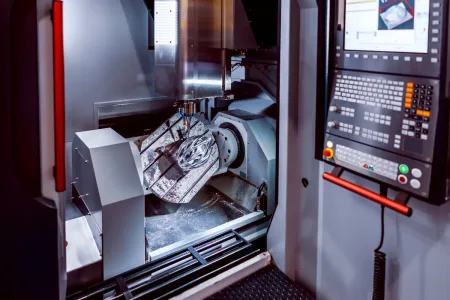
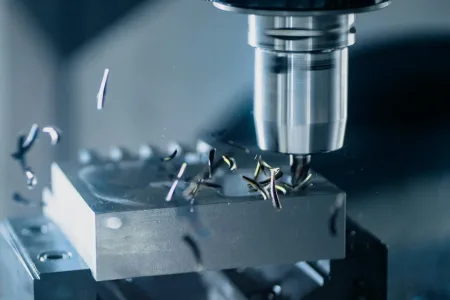
Precision CNC milling centers offer racing engineers high accuracy, speed, easy customization and great versatility. This versatility means these multi-axis machines are comfortable working with a wide range of raw materials and can be programmed to optimize tool paths, speeds and feeds to match any requirement.
The advantages of CNC milling services for motorsports
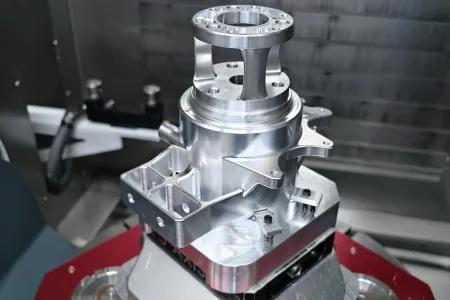
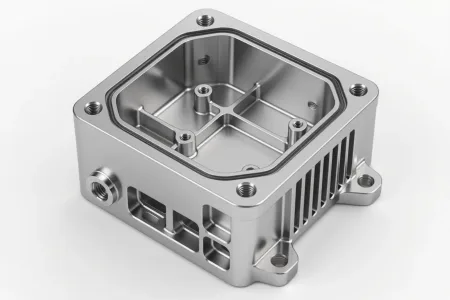
CNC milling centers use many kinds of cutting tools to produce flat surfaces, ring grooves, thin-walled features, prismatic shapes, asymmetrical contours, slots, ribs, compound angles, and weight-saving pockets.
Finally, next-generation iterative design software can now calculate ideal “organic” shapes with very complex topographies optimized for specific engineering loads and constraints. These can only be made by multi-axis CNC milling centers.
By producing these features in a single work-holding setup, processing time is reduced while maintaining tight tolerances.
Materials used for CNC milling of motorsports parts
As with turning, CNC milling centers quite happily process virtually any solid raw material to fit the required application. These must balance the qualities of stiffness, ultimate strength, thermal stability, machinability, and light weight.
High-performance materials for CNC milling include:
- AL-7075-T6
- Ti-6Al-4V (Grade 5)
- 17-4 PH stainless,
- Chromoly
- Maraging steel
- Inconel
- Carbon fiber
- PEEK/POM engineering resins
- Magnesium
Examples of precision CNC milled parts in motorsports
Here are some examples of high-performance motorsport components made via precision CNC milling.
- Suspension uprights (knuckles)
- Control arms
- Cylinder heads
- Intake manifolds
- Throttle bodies
- Aerodynamic wings and diffusers
- Brake caliper bodies
- Steering wheels and control interfaces
CNC milling allows for aggressive material removal to reduce weight, leaving behind skeletonized designs that maximize strength precisely where it’s needed.
And control interfaces, such as pedals and steering wheels, can also be custom machined to match an individual driver’s anatomy or preferences.
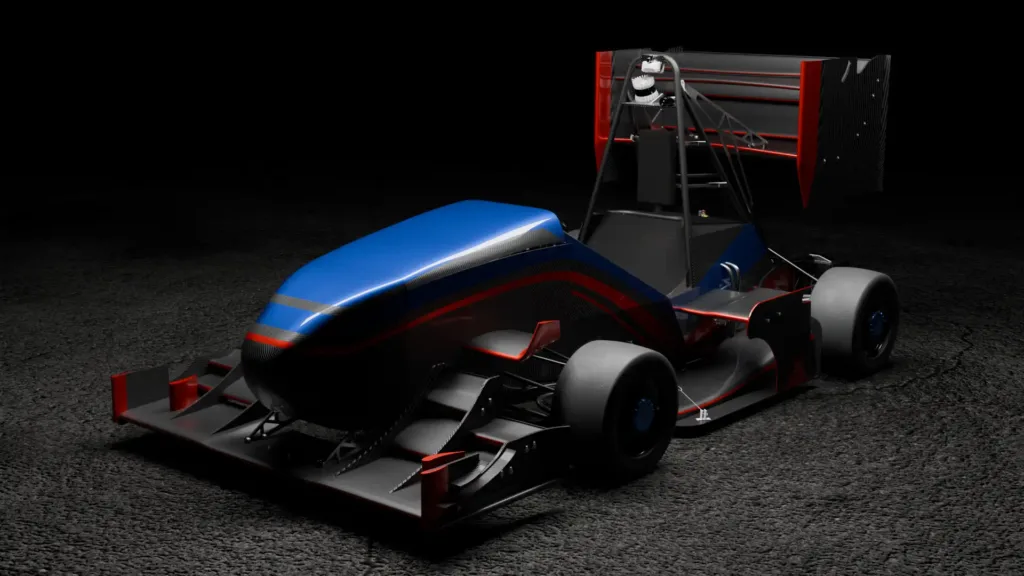
Top-tier OEMs, as well as privateers and racing teams, choose to work with Procision Manufacturing to fabricate beautifully crafted, tight tolerance custom metal and plastic motorsports parts with no volume restrictions.
Suspensions, brakes, chassis, control levers, actuators, gears, bearings: when you’re ready to rev up your engine, contact us for a free quotation and project review today.