
Summary
Emerging technical solutions help suppliers of plastics used in automotive interiors to meet regulatory and manufacturing challenges while satisfying consumer demands for premium look and feel.
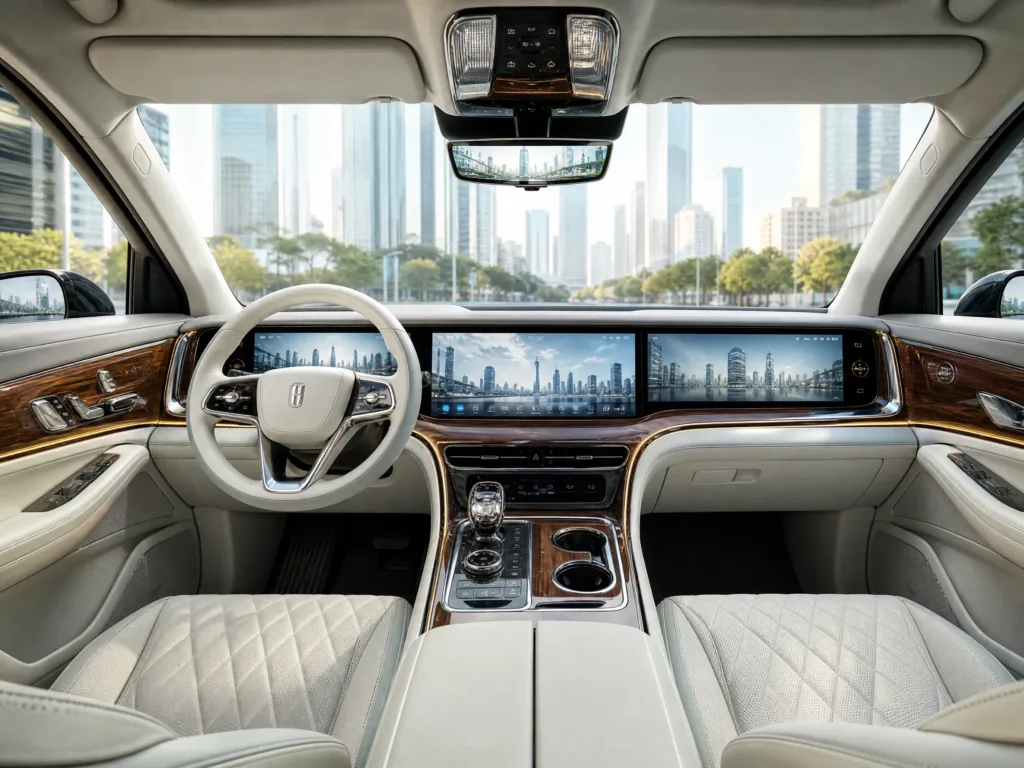
Fully electric vehicles, hybrids, and extended range EVs are popular in the luxury and high-performance automotive market.
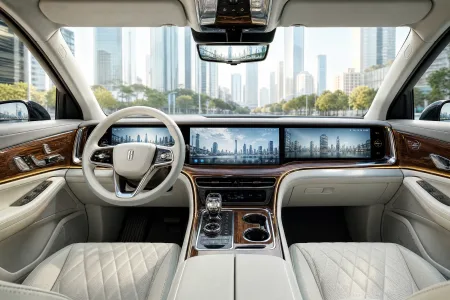
Along with the superior performance and energy efficiency provided by these vehicles, consumers expect every interior tactile surface to reinforce a sense of exclusivity and quality.
This subjective impression of quality depends on two main factors.
The first is visual, where the eye looks for details that appear refined, glare-free, reassuringly solid, and carefully crafted.
The second factor is haptics – the sense of touch – which transmits to the hands the unique sensation of rich leather, soft velvet, smooth silk, or polished metal.
Tier 1 suppliers of plastic injection molding services for automotive interiors are therefore expected to provide a rewarding sensory experience, while also complying with new regulatory guidelines meant to control volatile organic compounds (VOCs) and other environmental impacts.
To meet these challenges, they turn to clever new technologies and applications to make plastic products for automotive interiors that are beautiful, durable, comfortable, and sustainable.
The Regulatory Challenges Facing Automotive Plastic Suppliers
The regulatory challenges facing automotive plastics suppliers can be daunting and involve numerous local and international governing bodies. They all seek to either prevent or limit the harmful environmental effects brought about by the design and development of automotive interiors.
Major regulations include China’s global focus on ESG (Environmental, Social and Governance), RoHS and REACH in Europe, and EPA regulations in the U.S.
Collectively their goals are to:
- Limit the use of VOCs in paints and adhesives
- Promote reuse and recycling while decreasing raw material consumption
- Increase the use of natural fibers and additives
- Eliminate wastewater from plating operations
- Reduce the carbon footprint
The Design Goals for Luxury Automotive Brands
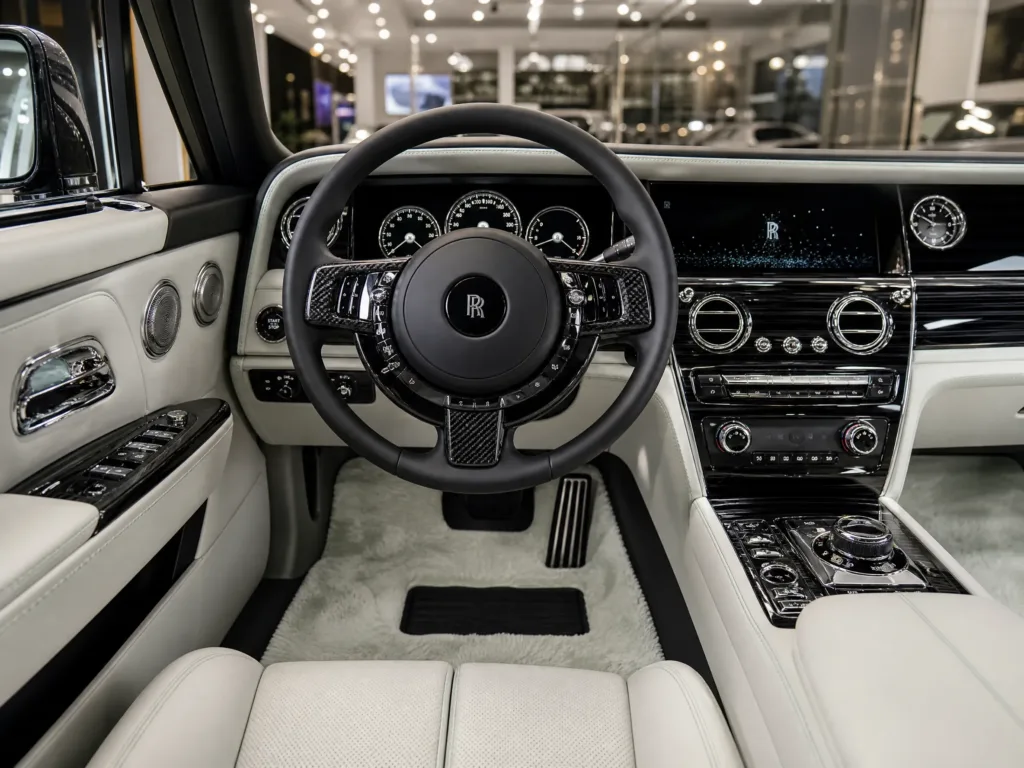
Automakers of conventional luxury combustion engines and EVs must satisfy multiple design goals in order to maintain the status of their brand image and the expectations of their customers. These include:
- Reduce noise, vibration, and harshness
- Keep weight low to enhance performance and meet fuel economy standards
- Provide energy-absorbing surfaces for crash protection
- Reduce carbon footprint
- Limit the consumption of raw materials
- Offer premium textures, colors, and surface finishes
- Create hybrid and composite structures that support increasingly digital and electronic control interfaces
Meeting these challenges means combining legacy manufacturing platforms with new and emerging technologies.
The Role of Haptics in Automotive Interior Design
The purpose of haptics in automotive interior design is to craft surfaces that feel good. However, that’s very subjective and hard to define. This is because the experience of touch is a complex interplay between the surface chemistry of the material, its topography, and individual nerve receptors in human skin.
A nice attempt to quantify haptic perception is being developed by leading coating manufacturer Covestro, who’ve created a metric called HapticMappingtm. It combines four factors – coefficient of friction, microhardness, polymer deformation, and modulus – to derive an overall rating for a given surface.
No matter the rating, it’s universally acknowledged that bare, flat plastic is considered “cheap” by consumers. They want to touch the surface, and the more they like the touch the more they rate the experience as luxurious.
With the above constraints in mind, let’s look at the ways plastic injection molding suppliers are meeting market expectations for high-quality plastic automotive interior components while also addressing environmental and cost concerns.
Ready to start your plastic injection molding project?
Upload your drawings for a free quotation from Procision Manufacturing.
Overmolding for Soft-Touch Surfaces
Some soft-touch surfaces are made via 2K injection molding.
In the first stage, a rigid plastic base substrate is plastic injection molded, often from PC, PP, acrylic or nylon/ABS. Once this part is molded it remains inside the tool cavity.
A secondary injection molding operation then applies a softer TPE / silicone over the substrate while it’s still warm. This bonds the two materials together without the need for adhesives.
The final product is smooth and seamless, featuring tight tolerances and a precisely engineered feel that can be adjusted by modifying the Shore value of the elastomer. It’s cost-effective, fast, and the process is stable and mature.
Innovations in two-part overmolding technology
Some improvements to this process include:
- Low-Shore A TPE compounds that mimic the feel and grip of leather
- Recyclable thermoplasticformulations
- Soft-touch water-based polyurethane coatings that are more environmentally friendly
Automotive applications for two-part overmolding
Overmolded parts can be found in many automotive interiors, including high-end and luxury EVs.
- Steering wheel grips
- Gear shift knobs
- Hand brakes
- Door handles / pulls
- Dashboard switches / buttons
- Center console armrests and cup holders
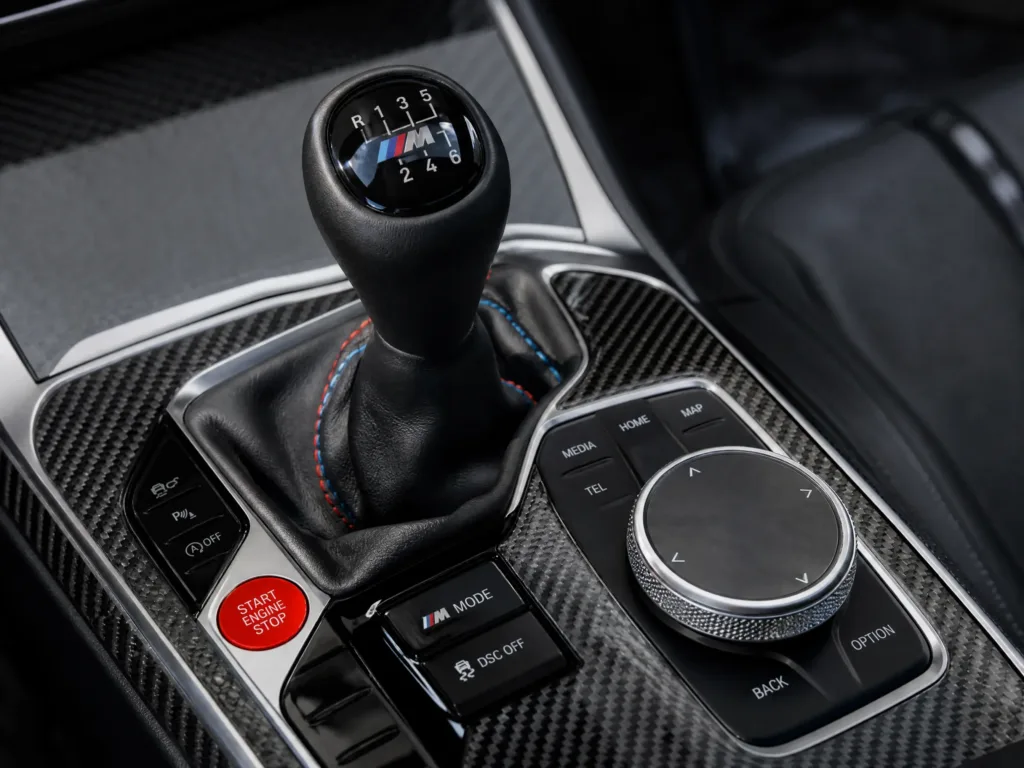
Metallic Finishes for Automotive Interiors
Metallic finishes used in automotive interiors have traditionally been made via electroplating. Although the chrome effect can be very polished and premium in appearance when new, this process nevertheless has serious drawbacks:
- The plating bath uses hexavalent chromium, a toxic carcinogen. It must be processed under strict containment procedures featuring expensive air filtration and water treatment
- Increased cost for disposal and worker safety protocols
- Requires extensive surface preparation and a multi-step plating process, adding even more cost and complexity
- Consumes large amounts of energy
- Colors are limited to chrome or silver only
- The plated surface is thin and brittle and prone to corrosion if the outer layer is breached
- Limited design flexibility
- Impossible to repair
- Difficult to color match
This is a long list of disadvantages, but luckily there is an emerging solution that is superior in almost every way.
Physical Vapor Deposition (PVD)
PVD uses magnetron sputtering or arc evaporation to deposit thin layers of vaporized metal or ceramic directly onto the prepared plastic substrate. There are many advantages:
- No hazardous hexavalent chromium
- Strong film adhesion
- Many colored metallic effects can be achieved
- Durable and scratch-resistant
- Lower energy usage
Luxury car brands are increasingly turning to PVD to achieve sophisticated metallic effects without the environmental impact.
Vacuum Metallization (VM)
In vacuum metallization, a bar of metal – usually aluminum – is melted in a vacuum chamber, causing it to become aluminum vapor which then coats the target in line-of-sight.
Compared to PVD, VC exhibits relatively poor adhesion and durability. However, it’s less expensive and produces a much shinier chrome-like finish.
Applications of metallized surfaces in automotive interiors
Metallized automotive interior pieces using both VM and PVD surface treatments, sometimes combined, include:
- Volume control and climate control knobs
- Door handles
- Window and mirror control switches
- Instrument display bezels
- Window trim
- Speaker grills
Pre-Colored Plastic Resins for Automotive Interiors
Pre-colored plastic resins are used in many applications in premium EV and conventional automotive interiors. To maintain a luxury look and feel, they can be texturized in the mold or combined with IMD to produce sophisticated and durable surfaces that simulate wood grain, leather, or fabric.
Covestro and others continue to develop a wide range of pre-colored plastic resins that can be used directly in legacy plastic injection molding machines, thereby avoiding the need to invest in retooling or upskilling. Advantages include:
- Perfect color consistency between production runs
- No need for pre-mixing with masterbatch pigments
- Fast and cost-effective, no additional processing steps
- Design flexibility
- No painting-related VOCs
- UV stable and chemically resistant
Because the color is baked-in, minor scuffs or scratches won’t show through the surface.
Applications for pre-colored plastics in luxury automotive interiors
Pre-colored automotive plastics are used in premium EVs and luxury cars to make:
- High gloss, “piano” black bezels and trim for instruments and displays
- Non-glare, scratch-resistant touch panels
- Arm rests, overhead consoles
- Center console inlays
- Illuminated gear shift knobs
- Metallized panels
In-Mold Decorating (IMD) For Luxury Automotive Interiors
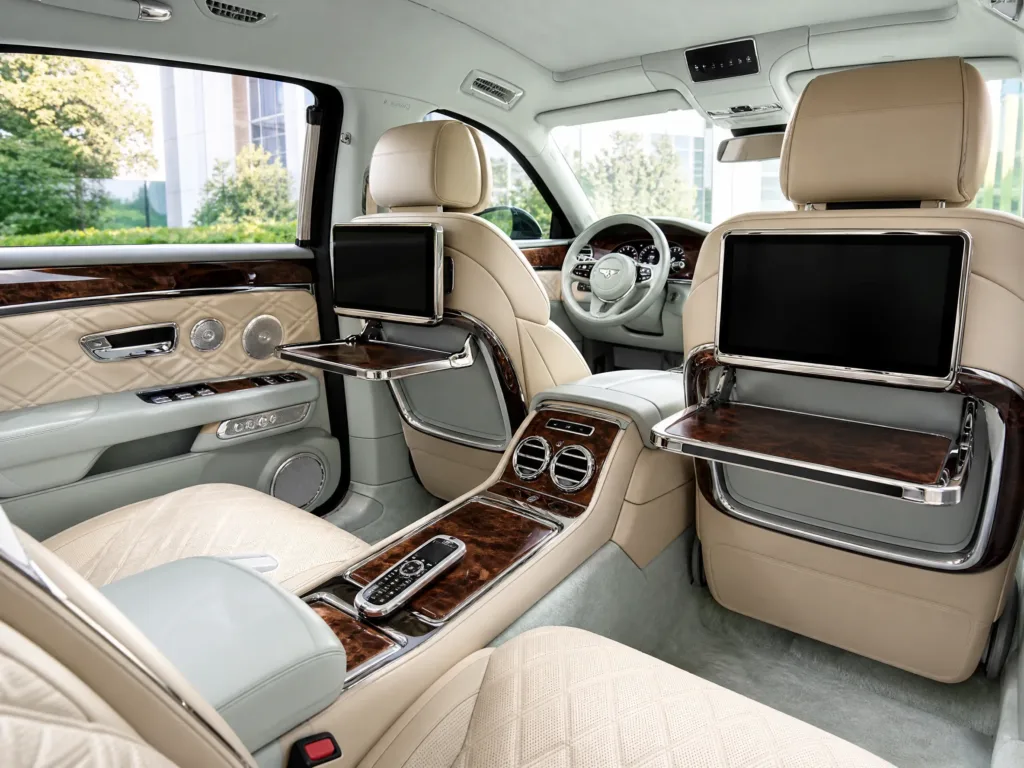
In-mold decorating (IMD) is a boon for luxury EV and conventional interior design, allowing engineers to create premium offerings that bypass many of the limitations of traditional plastic injection molding.
Conventional injection molded components are sometimes silk-screened, printed, or painted after molding. However, the process has drawbacks:
- Produces VOCs
- Not energy efficient
- Requires multiple process steps
- Finished parts lack durability
With IMD, completely finished parts emerge directly from the mold and require no post-processing. Here’s how it works:
Film Preparation
a. The film is a transparent sheet containing a pre-printed design. It’s usually made from Polycarbonate (PC), Acrylic, Polyester, PC-PET, Acrylic Capped PC, or Silicone.
b. This film may have several layers, including:
- Clear, hard top layer for protection
- Decorative layer with printed graphics, textures, wood grains, carbon fiber patterns, or metallic effects.
- Adhesive layer
- Carrier layer, used for film positioning
Insertion
c. The film is cut to the precise size and shape to fit the mold.
d. It’s placed in the mold cavity and held there under vacuum or with mechanical clamps.
Molding
e. Hot plastic resin is injected into the mold, which causes the film adhesive to melt and fuse permanently with the plastic substrate.
The resulting finished part has many desirable qualities:
- Resists scratching, fading, peeling, or delaminating
- Very high design flexibility
- Ideal for complex curved surfaces
- Perfect for today’s digital touchscreens
- Soft-touch surfacescan be permanently built-in
- Faster and more cost-effective
- Environmentally friendly
IMD can also be combined with other processes such as PVD.
- After the initial molding forms the base pattern, PVD metallized accents are added later to create a premium look, such as a metallic bezel or subtle color-shifting accent.
Applications for IMD plastic parts
Automotive interior designers are increasingly using IMD to create high-quality components including:
- Instrument clusters featuring high-gloss black panels and illuminated graphics
- Center consoles with wood grain or carbon fiber finishes
- Door handles and trim with metallized or soft-touch surfaces
- HVAC controls featuring graphics or words that will never fade or wear off
Conclusion
To meet consumer expectations in the luxury conventional and EV automotive space, top tier plastic injection molding suppliers continue to develop improved and hybrid molding solutions.
These solutions not only offer a premium look and feel to car interiors, but they’re also more cost-effective and meet stringent regulatory standards.
Procision Manufacturing is a plastic injection molding specialist offering overmolding, insert molding, medical injection molding, micro molding and related services to meet the highest standards of the automotive industry.
Contact us today for a free quotation and no-obligation design review.